

 EU Citizenship
 Slovenian Citizenship
 Romanian Citizenship
 Bulgarian Citizenship
 Austrian citizenship (investments)
 Spanish Citizenship
 Italian Citizenship
 Cypriot Citizenship
 Lithuanian Citizenship
 Portuguese Citizenship
 French Citizenship
 German Citizenship
 Hungarian Citizenship
 Dutch Citizenship
 Belgian Citizenship
 Croatian citizenship


Spanish Residence Permit: Eligibility, Types, and Application Process in 2026

Author: Leon Scott
Published: 13.01.2026
Updated: 16.01.2026
A Spain residence permit is an official authorization that allows a foreign national to live in Spain beyond the tourist stay limit (90 days). It is typically issued as a biometric card known as the Tarjeta de Identidad de Extranjero (TIE), which serves as proof of legal residence. Temporary residence permits let you reside in Spain for more than 90 days up to five years, whereas a long-term (permanent) residence permit lets you reside (and work) indefinitely under the same conditions as Spanish citizens. In practical terms, a residence permit is mandatory for non-EU citizens planning to stay in Spain long-term, and it is the gateway to benefits like working rights, access to healthcare, and eventually the option to attain permanent residency or citizenship.
Spain offers various residence permit types to suit different immigration pathways. Whether you are moving for work, study, retirement, investment, family reunification, or remote work, there is a specific permit for your situation. For EU/EEA/Swiss nationals, a simplified registration certificate (sometimes informally called an EU residence certificate) is used instead of a standard residence card, due to freedom of movement rights. In all cases, obtaining the appropriate Spanish residence status is crucial to reside legally in the country beyond short visits.
Who Can Apply for a Spanish Residence Permit?
EU/EEA and Swiss Citizens: If you are a citizen of the EU, EEA, or Switzerland, you do not need a visa to live and work in Spain. You have the right to free movement. However, you must register with local authorities if staying longer than 3 months, obtaining a Certificado de Registro (Residence Certificate) rather than a traditional “permit.” This registration is straightforward and confirms your right to reside in Spain (you’ll be issued an NIE number and a green certificate). Family members of EU citizens who are not EU nationals can apply for an EU Family Member Residence Card, which confers similar rights under EU law.
Non-EU Citizens: If you are from outside the EU/EEA, you must apply for a Spanish residence permit (often starting with a visa from a Spanish consulate) to stay more than 90 days. This applies to various profiles of immigrants, including:
- Workers: Those with a job offer in Spain or entrepreneurs/investors.
- Students: Non-EU students enrolled in Spanish institutions for courses longer than 90 days.
- Family Members: Relatives (spouses, children, etc.) joining a family member who is a legal resident or citizen in Spain.
- Retirees and Individuals with Independent Means: People who wish to retire or live in Spain without working (using savings or passive income).
- Digital Nomads/Remote Workers: Those working remotely for foreign companies who want to base themselves in Spain.
- Investors: (Until 2025) Individuals investing significant funds in Spain (real estate, business, etc.) under the now-ended Golden Visa program.
In general, anyone who is not a Spanish citizen and wishes to reside in Spain long-term can apply for a residence permit, provided they meet the specific criteria for the permit category that matches their situation. It’s important to choose the correct permit type for your purpose of stay. Each category has its own eligibility requirements and application process (detailed in the next sections). Note that visa-exempt nationals (e.g. from the U.S., Canada, Australia, etc.) still need a residence permit if staying beyond 90 days – visa exemption only covers short tourist or business visits. Essentially, if you plan to make Spain your home – temporarily or permanently – you will need to go through the residence permit process.

Types of Residence Permits in Spain
Spain’s immigration system offers several types of residence permits to accommodate different reasons for moving. Below are the main categories of Spanish residence permits and visas, each with its key features and conditions.
1. Non-Lucrative Residence Visa (No Work Permit)
The Non-Lucrative Residence Visa is a popular option for non-EU foreigners who wish to live in Spain without working or engaging in any professional activity in Spain. It is especially favored by retirees, remote-income earners, and others who have sufficient independent financial means. This visa allows you to reside in Spain long-term provided you can support yourself (and any accompanying family) entirely from savings or passive income, since local employment is not allowed under this permit.
Financial Requirements: You must demonstrate substantial financial resources to cover living expenses in Spain without a job. The minimum required income is tied to Spain’s IPREM index. Currently, you need at least 400% of IPREM as income or savings. In 2025, this equated to roughly €2,400 per month (about €28,800 per year) for a single applicant. If you have family members, you must show an additional 100% of IPREM for each dependent (approximately €600 extra per month, or €7,200 per year, per person). These funds can come from pensions, investments, savings, rental income, etc., and you’ll provide bank statements or proof of income to the consulate. Essentially, a family of four would need to prove an income of around €4,200 per month in 2025.
Other Requirements: Applicants must have comprehensive private health insurance in Spain, a clean criminal record, and often a medical certificate attesting to good health (stating you have no serious communicable diseases) as required for long-stay visas. You also need to show proof of accommodation in Spain (either a lease, property deed, or letter of invitation) in many cases. Spanish consulates may scrutinize that you truly intend to reside in Spain (for instance, they might ask about your plan for housing or, if you have school-age children, proof of school enrollment).
Validity and Renewal: The non-lucrative visa is typically issued as a D visa for 3 months to enter Spain. Upon entry, you must register and obtain a TIE card for a residence authorization valid for 1 year. This temporary residence can then be renewed for 2-year periods as long as you continue to meet the requirements (financial means, insurance, etc.). After 5 years of continuous residence, you become eligible for a permanent residence (long-term) card. Note that while on a non-lucrative permit, you cannot take up employment in Spain, but you can study or even do remote work for non-Spanish companies (however, if your intention is to work remotely, the new Digital Nomad visa might be more appropriate). Also, you should spend at least 6 months per year in Spain on this visa to be able to renew (sporadic lengthy absences could jeopardize renewals). This visa is ideal if you are financially independent and wish to enjoy life in Spain, but it’s not for those needing to work locally.
2. Work Residence Permit (Employment or Self-Employment)
A Work Residence Permit allows non-EU citizens to live in Spain and legally work, whether as a salaried employee (“por cuenta ajena”) or as a self-employed professional or entrepreneur (“por cuenta propia”). There are several subtypes of work permits, but generally they fall into two categories:
- Employed Work Permit: You have a job offer from a Spanish employer. The employer typically must apply for a work authorization on your behalf at the immigration office in Spain. Standard work permits for non-EU hires often require the job to meet certain conditions (e.g. appear on a shortage occupation list or the employer must prove no suitable EU candidate was available, although 2022 regulatory reforms have made hiring non-EU workers easier in many sectors). Once the work authorization is approved, you apply for a visa at the consulate to enter Spain and then get your residence/work card. These permits usually last one year initially (tied to the job contract) and are renewable for 2 years at a time. Changing employers is possible after the first year (or earlier for highly qualified workers or with permission).
- Self-Employed Permit: You plan to work in Spain as a freelancer or start a business. You must present a viable business plan, proof of funds to invest, and any necessary licenses or professional qualifications. The authorities will evaluate if your enterprise is likely to sustain you financially. This type is sometimes referred to as an entrepreneur visa if it’s an innovative startup (there’s also a specific Entrepreneur Visa under the 2013 Entrepreneurs Law for innovative businesses). For standard self-employment, initial permits are typically 1 year, renewable for 2-year periods.
EU Blue Card & Highly Skilled Permits: Spain also offers an EU Blue Card for highly skilled professionals with a job offer meeting a high salary threshold (usually 1.5 times the average salary) and a university degree. Additionally, under the Entrepreneurs Law, there is a Highly Qualified Professional permit for specialized roles (e.g., senior managers, technical experts) which companies can use to hire non-EU staff more quickly. These have somewhat streamlined processes and can be valid for 2 years initially.
Requirements: For work permits, the emphasis is on the job contract or business viability rather than the applicant’s own savings. You’ll need a work contract (for employees) or a detailed business plan (for self-employed), proof that you have the necessary professional qualifications or experience, and that you have no disqualifying criminal record. Basic requirements like health insurance and no serious illnesses also apply. The employer may need to demonstrate compliance with labor laws and that the salary meets minimum wage or industry standards. In 2023, Spain updated its regulations to be more flexible: for example, international graduates of Spanish universities can more easily obtain work authorization, and certain sectors facing labor shortages have more relaxed criteria for hiring foreigners.
Work Rights: Holders of a work residence permit can legally work in Spain (either for the sponsoring employer or in the declared business activity). Once your permit is granted, you have the same labor rights as a local employee, including access to social security. Family members can typically join you after you’ve settled (see Family Reunification below), and notably, reuniting spouses are usually given immediate work authorization now. One key point: during the first year, an employed work permit may tie you to the specific province/job that was approved, but upon renewal you often get more flexibility in job mobility.
3. Student Residence Permit (Estancia por Estudios)
If you are a non-EU citizen admitted to a Spanish educational institution (university, school, etc.) for studies or research longer than three months, you will need a Student Visa, which functions as a temporary residence permit for the duration of your studies. This category technically falls under “stay” (estancia) rather than residency, but in practice it allows you to reside in Spain for education.
Key Features: A student visa is typically valid for the length of your academic program (e.g. one academic year, renewable if your program is longer). For example, if you enroll in a two-year master’s program, you would get a visa for one year and then renew it for the second year. You must remain enrolled and making progress in the course to renew. Students can also bring immediate family (spouse, children) on a student family visa, though the student must show additional financial means for them.
Requirements: You must show an acceptance/enrollment letter from a recognized Spanish institution, proof of financial means to support yourself during studies (the required amount is roughly equivalent to the IPREM as a monthly figure – approximately €600–€700 per month in 2025 for living expenses, though this can vary by consulate) and proof of payment or funding for the course/tuition. You’ll also need health insurance (often private insurance unless you qualify for public healthcare) and a clean criminal record certificate (if you are over a certain age, usually 18, and if the stay is over 6 months). A medical certificate may be required if the study period exceeds 180 days, stating you don’t have diseases that could pose public health risks (like tuberculosis, etc.).
Work Rights: Students in Spain are allowed to work part-time (up to 20 hours per week) or full-time during academic vacation periods, as long as it does not interfere with their studies. The employer must obtain a special work authorization for the student, but this process is simpler since 2022 (in many cases, it’s automatically granted for up to 30 hours/week jobs). Essentially, while your primary purpose is studying, you can legally take on internships or small jobs to support yourself, within the hour limits. Note that income from work does not count towards demonstrating financial means for your visa renewal; you’re expected to have independent funds or scholarships.
Post-Study Options: Importantly, Spain has improved the post-study opportunities for international students. Under a reform effective in 2023, foreign graduates at Level 6 or above (Bachelor’s degree and higher) can now obtain a 24-month residence authorization after graduation to seek employment or start a business in Spain. This is essentially a job-search or entrepreneurship visa for alumni, which is a great pathway to transition from studies to a work permit. (Previously it was a non-renewable 12-month permit; now it’s extended to 2 years). During this period, once you find a qualifying job, you can convert to a normal work residence permit without needing to leave Spain. Time spent as a student counts half toward long-term residency (e.g., two years on a student permit might count as one year toward the five-year requirement for permanent residency). If you plan to study in Spain, this route offers a clear pipeline from education to employment and longer-term residence.
4. Digital Nomad Visa (Remote Work Residence)
Spain recently introduced the Digital Nomad Visa, officially termed the “visado y autorización de residencia para teletrabajo internacional,” aimed at non-EU remote workers and self-employed individuals who want to live in Spain while working remotely for non-Spanish companies or clients. Launched as part of the 2022 Startups Law (Ley 28/2022), this visa has quickly become a very attractive option in 2023–2026 for freelancers, remote employees, and online entrepreneurs seeking Spain’s sunny lifestyle without having to obtain a local job contract.
Who is it for? Qualified professionals who can perform their job remotely and have clients or an employer outside Spain. You must either be employed by a non-Spanish company or be a freelancer with mostly foreign clientele. The law allows digital nomad visa holders to work for non-Spanish companies and also permits some work for Spanish companies as long as the Spanish portion does not exceed 20% of your total activity.
Key Requirements: Applicants need to prove professional qualifications (either a university degree, professional training, or significant experience in their field), and a track record of working remotely. If you’re an employee, you should have worked for your company for at least 3 months and have a contract allowing remote work. The company you work for must have been operational for at least a year. If you’re self-employed, you should show a history of freelance or business activity and contracts with foreign clients. All applicants must demonstrate a stable income sufficient to support living in Spain. The required income is set at 200% of the Spanish minimum wage (SMI). In 2025, 200% of SMI was about €2,368 per month (since the minimum wage was ~€1,184/month). If you plan to bring family, the threshold increases: +75% of SMI for the first dependent (approx. €888 extra) and +25% of SMI for each additional family member. In practice, a remote worker with a spouse and one child would need to show roughly €3,552 per month income. You’ll also need private health insurance in Spain (or proof of social security coverage if your home country has an agreement), no criminal record (background checks from your home country and any country you lived in recently), and a medical certificate of good health. All documents not in Spanish must be officially translated and apostilled.
Validity: The digital nomad visa issued by consulates allows you to enter and reside in Spain for up to 1 year. Uniquely, the visa itself is sufficient for residency during that year, but if you stay longer than 6 months you should obtain the TIE card. Before the 1-year visa expires, you can apply within Spain for a residence authorization for remote work which is valid for up to 3 years (or the remainder of the 3-year period if you already spent a year on the visa). This three-year residence permit can then be renewed for additional 2-year periods subsequently, as long as you continue to meet the conditions (e.g. maintain remote employment and income above the threshold). That means you could potentially live in Spain for 5 years (1 + 3 + 1 year after renewal) on this status, which would then make you eligible for permanent residency. In fact, time on the digital nomad residence counts toward the five years needed for long-term residency.
Tax note: Many digital nomads can also take advantage of Spain’s special tax regime for foreign remote workers (Beckham Law), which can cap your income tax at a flat 24% for up to 5 years, if eligible. This is separate from the immigration process but worth noting for remote workers thinking about the move.
This visa is a game-changer for those who have location-independent work. It lets you enjoy living in Spain without having to find a local job. As long as you can prove your remote income and meet the criteria, the process is relatively streamlined (the law stipulates fast processing — decisions may come within 20 working days of application, and if no decision is given in that time, it’s approved by default). Spain has positioned itself as a digital nomad-friendly destination with this permit, attracting global talent to its cities and coasts.

5. Family Reunification Residence Permit (Reagrupación Familiar)
The Family Reunification residence permit allows non-EU foreign residents in Spain to bring their immediate family members to live with them. If you are legally residing in Spain, you can apply to reunite certain family members under the general regime. Separately, if you are a Spanish citizen (or EU citizen in Spain), your non-EU family members can use a EU Family Member Residence Card process, which is more favorable (we’ll note differences below).
Under the general family reunification (for family of non-EU residents):
- Eligible family members: your spouse or registered partner; your children (and your partner’s children) under 18 (or adult children who are dependent due to disability); and your dependent parents (typically if over 65, though exceptions possible for humanitarian reasons). Recently, Spain has also broadened definitions in special cases (e.g., adult children who will care for you if you are incapacitated, or other dependents under legal care), but the core is spouse and minor children.
- Sponsor’s prerequisites: The sponsor (reagrupante) must have legal residency in Spain for at least one year and have a residence permit renewed for a second year. In practice, this means if you came on a one-year permit (e.g. work or non-lucrative visa), you can apply for family reunification after you have your first renewal (so at around the 1-year mark, when you obtain a 2-year card). Exception: If the family member is a parent, you generally cannot reunite them until you yourself have long-term (5-year) residence. (Spouses and kids can come earlier, parents later in your residency journey.)
- Financial Requirements: You must prove you have sufficient income to support your family in Spain, so they won’t become a burden on the state. The law sets a minimum of 150% of IPREM for a family of two (sponsor + one dependent). In 2025 terms, 150% IPREM was about €1,134 per month for you and one family member. For each additional family member, add +50% of IPREM (~€378 extra). For example, to reunite a spouse and two children, you’d need around 150% + 50% + 50% = 250% of IPREM in income (roughly €1,890/month in 2025). Acceptable proof may include pay slips, employment contracts, bank statements, or tax returns demonstrating stable income. If you (the sponsor) are on a non-lucrative visa, note that bringing family means you must show you have the higher financial resources that were required for dependents on your visa from the start.
- Housing: You must also provide evidence of adequate accommodation for your family. This could be a rental contract or property deed and often a report from your local town hall or regional government certifying that your dwelling is suitable for the number of people (with sufficient space, sanitary conditions, etc.). Authorities want to ensure that when your family arrives, they have a proper place to live.
- Other requirements: Health insurance for all family members (private or public coverage as applicable), and family members must have no criminal records. If children are of school age, proof of enrollment in school in Spain after arrival will be needed (education is compulsory for ages 6–16 in Spain, and the authorities may check that reunited children get enrolled – sometimes referred to as a required schooling plan).
Application Process: The process is two-step. First, you (the sponsor in Spain) submit a family reunification application at the Foreigners Office (Oficina de Extranjería) in your province. You’ll include documentation of your income, housing, relationship (marriage or birth certificates, etc. which must be legalized/apostilled and translated), and insurance. The immigration office reviews and, if all conditions are met, approves a family reunification authorization. This decision can take a couple of months. Once approved, your family member in your home country will apply for a reunification visa at the Spanish consulate with the approval letter. They have a limited time (usually 2 months) to travel to Spain after visa issuance.
Residence Card and Rights: When your family member arrives in Spain, they must obtain their TIE residence card (which will be tied to your residency). The initial family residence card is often valid for the remainder of your own permit’s validity. For example, if you have 2 years left on your residence card, their card might expire when yours does. Reunified spouses and adult children are typically granted the right to work in Spain without any extra work permit, as soon as they get their residence card. This is a significant benefit – Spain changed its rules such that family members (under general regime) can work immediately now (no need to wait for a year or get a separate work authorization). Minor children of course are not working, but can attend school, etc.
Family of EU/Spanish Citizens: If you are a Spanish citizen or an EU citizen residing in Spain, a different, more generous regime applies – often referred to as the Community Family Card (tarjeta de familiar de comunitario). The requirements are simpler: you must show that you (the citizen) have sufficient resources and insurance, but the income threshold is generally lower and there’s no one-year residence prerequisite. Spouses, registered partners, children (under 21 or dependent), and dependent parents qualify, as well as other dependents in some cases. Notably, in late 2023 Spain approved a new 5-year residence card specifically for non-EU family members of Spanish nationals, simplifying their process. This 5-year card (which allows work from day one) replaces older mechanisms like “family arraigo” for Spanish families. The age limit for dependent children was raised to 26 (from 21) and for parents to 80 (from 65) in these new rules, broadening eligibility. Family members of EU citizens similarly get a 5-year EU family member card. The bottom line is that if your sponsor is a Spanish/EU citizen, your residence rights are stronger and you can work without separate permit, and you bypass the quota constraints of the general regime.
Family reunification policies underscore that Spain values family unity, but you must prove you can support your family and have met the conditions of your own stay. After five years, reunited family members can typically apply for independent long-term residency, and after a year as a long-term resident, they could even reapply to bring over other family themselves. Also, if the family situation changes (e.g., divorce, or domestic violence situations, or the death of the sponsor), there are provisions for family members to keep their residency independently in certain cases.
6. Golden Visa (Investor Residency) – Program Ended in 2025
Note: Spain’s Golden Visa program was officially terminated in April 2025, meaning new applications are no longer accepted. We describe it here for completeness, as many 2024 guides list it as an option. Investors now may need to consider alternative routes or await any new policy changes.
The Golden Visa was a residency-by-investment program launched in 2013 (effective 2014) that allowed non-EU investors to obtain Spanish residency rights in exchange for a significant economic investment. It was formally known as the “Investor’s Residence Visa/Permit” under the Entrepreneur’s Law (Law 14/2013). Over 14,000 golden visas were granted, mainly to investors from China, Russia, the U.S., etc., until the program’s end in 2025.
Investment Options: To qualify, an applicant had to make one of the following minimum investments in Spain:
- Real Estate: Purchase property (or multiple properties) totaling at least €500,000 (free of mortgages or liens). This was the most popular route (about 94% of golden visas were via real estate, often in cities like Madrid, Barcelona, Malaga, etc.).
- Capital Investment: Invest €1,000,000 or more in Spanish companies’ shares, or bank deposits in Spanish financial institutions of at least €1 million.
- Government Bonds: Purchase €2,000,000 in Spanish government bonds.
- Business Project: Alternatively, a visa could be granted for a significant entrepreneurial project in Spain that is considered of general interest (creation of jobs, scientific/technological innovation, or socioeconomic impact). This option didn’t have a fixed euro threshold but required high-level approval of the business plan.
Benefits: The Golden Visa was very attractive because it offered fast-track processing (around 20 working days) and flexibility. Holders could live in Spain and work (the permit allows employment and self-employment) and travel freely in the Schengen Area. Crucially, there was no minimum stay requirement to keep the permit. You did not need to live in Spain full-time; as long as you maintained the investment, you could renew the permit indefinitely. Many investors took advantage of this to have residency as a option while primarily living elsewhere. Family members (spouse, children, and dependent parents) were included under the same investment – they all obtained residency too. Golden visa residents could eventually apply for permanent residence after 5 years if they actually resided in Spain for the majority of that time (the permanent residency required actually living in Spain ≥5 years). They could also go for Spanish citizenship after the standard 10 years (or 2 in special cases), although most Golden Visa holders did not stay full-time enough to qualify for citizenship easily.
Validity: Initially, investors could either apply for a 1-year D visa to enter Spain or skip straight to a residence authorization if already in Spain. The first residence permit was issued for 2 or 3 years (there was a change in law – in later years it became 3 years initial) and then it was renewable for 5-year periods. Renewal simply required proof you still hold the investment and have traveled to Spain at least once during the validity (a trivial requirement). Because of the program’s termination, those who got their initial permits before April 2025 can continue to renew under the old rules, but new investors can no longer apply via real estate or passive investment.
End of Program: Citing concerns that the Golden Visa was contributing to real estate price inflation and putting housing out of reach for locals, the Spanish government (led by PSOE in coalition) moved to abolish the real estate-based Golden Visa. A law passed in late 2024 and took effect on 3 April 2025, ending the issuance of new investor residence permits for property purchases. There was a surge of last-minute applications before the deadline. After that date, Spain stopped accepting Golden Visa applications. (Some investment-based residence options for business projects or highly strategic investments might remain via the general entrepreneur visa, but the straightforward cash-for-residency routes are closed.)
For investors still interested in Spain post-2025, one can consider the Entrepreneur Visa for starting a business, or standard residency routes (like a non-lucrative visa if you can show income). But the specific Golden Visa path of buying property for residency is no longer available. Current Golden Visa holders are generally allowed to keep and renew their permits, and they remain exempt from needing to reside in Spain full-time.
Summary of Key Permit Types: For a quick comparison, here is a table summarizing the different Spanish residence permits covered above, their work rights, duration, and main financial requirements:
| Permit Type | Work Permission | Initial Validity | Main Financial Requirement |
| Non-Lucrative Visa | No (work not allowed) | 1 year (then 2-year renewals) | ~€28,800/year income or savings (400% IPREM) |
| Work Permit (Employed) | Yes (for sponsoring employer) | 1 year (typical initial work permit) | N/A (Requires a Spanish job offer & salary contract) |
| Work Permit (Self-empl.) | Yes (self-employment) | 1 year (initial autónomo permit) | Investment funds as per business plan (variable) |
| Student Visa | Limited (20 hrs/week) | Program duration (often 1 year) | Funds to cover living costs (e.g. ~€600+/month) |
| Digital Nomad Visa | Yes (remote work only) | 1 year visa, then up to 3-year permit | €2,368+/month income (200% SMI) (+75% first dependent, +25% each extra) |
| Family Reunification | Yes (for spouse/dependents) | 1–2 years (linked to sponsor’s permit) | Sponsor’s income: 150% IPREM (~€1,134/mo) +50% per additional family member |
| Golden Visa (ended) | Yes (no restrictions) | 3 years (initial) | €500,000+ investment (property) or other large investment |
Requirements for a Spain Residence Permit
While each type of residence permit has specific criteria, there are common general requirements that almost all applicants must meet. Spain’s immigration laws set baseline conditions to ensure the immigrant can support themselves, is in good health, and does not pose a security risk. Here are the typical requirements:
- Valid Passport: You need a passport that is valid for at least one year (and usually with some empty visa pages). A copy of the passport (and previous visas) is part of the application. Many visas require the passport to be valid for the entire duration of the intended stay plus an additional period.
- Clean Criminal Record: Applicants (usually those aged 18 and above) must not have a serious criminal record. You’ll be asked to provide a criminal background check certificate from your country of origin (and any country you’ve lived in recently, typically in the past 5 years). This certificate should show no disqualifying convictions. Minor offenses might be overlooked, but anything major can result in denial. The certificate usually must be issued within 3 or 6 months of the application and be apostilled and officially translated into Spanish. Additionally, you sign a form or declaration affirming you have no criminal records in Spain as well.
- Financial Means: Proof that you have sufficient financial resources to live in Spain without relying on public funds is crucial. The amount and form of proof depend on the visa type (as detailed in the permit sections above). For example, a non-lucrative visa requires savings/income over 400% IPREM, a student visa requires enough funds for tuition and living expenses (often around 100% IPREM per month for living costs), and a work visa assumes your job salary will meet your needs (so separate proof of savings isn’t as critical, though showing some savings can help). Common proof includes bank statements, employment contracts, pension statements, investment portfolios, etc. If you’re sponsoring family, you must show additional income as noted. Spanish authorities want assurance you won’t become destitute in Spain; thus every application has an economic sufficiency check.
- Health Insurance: You must have health coverage in Spain. If you are not eligible for Spain’s public healthcare (which most newcomers aren’t until they work and contribute), you must get a private health insurance policy from an insurer authorized in Spain. The policy should provide comprehensive coverage equivalent to the public system, with no copayments or coverage gaps. Essentially, it should be full coverage for all medical, hospital, and emergency care in Spain (travel insurance is not acceptable). The insurance must cover you (and family if applicable) for at least the first year. For work visa applicants, once you start working and paying into social security, you get public healthcare access; but initially you may still need private insurance to cover the gap. EU citizens can use an EHIC card initially, but long-term should register for public healthcare. Health insurance is critical – applications are commonly rejected if the provided policy is not compliant (e.g., if it has a high deductible or limited coverage).
- Medical Certificate: For stays over 6 months, Spain often requires a doctor’s medical certificate of good health. This is a letter stating that you do not have any diseases that would pose a public health risk, such as those listed in the 2005 International Health Regulations (e.g., tuberculosis, polio, SARS, etc.). The certificate should be recently issued (within 3 months) by a licensed doctor, on letterhead, containing specific wording (many consulates provide an exact template). It typically says: “This applicant is free of any infectious diseases as per the International Health Regulations of 2005 and does not suffer from any disease that would pose a public health threat.” It must be signed, stamped, and usually needs an apostille and translation if not originally in Spanish. While a formality, it’s strictly required for many visa types (non-lucrative, student, etc.).
- No Immigration Ban: You must not be barred from entry into Spain or the Schengen Area. If you have been deported from Spain or another Schengen country or have an entry ban, you cannot get a permit until that is resolved. Also, if you previously agreed to a “commitment not to return” to Spain (for instance, as part of a voluntary return program), you must honor that period. Essentially, your immigration record should be clean. The authorities will check their databases to ensure you haven’t overstayed a visa or been expelled before.
- No Threat to Public Order/National Security: This goes hand-in-hand with criminal record – you should not be considered a security risk. In practice, this is assessed via your criminal record and possibly intelligence databases. It’s not usually a concern for ordinary applicants with no criminal background.
- Proof of Accommodation (Sometimes): While not a universal requirement by law, some consulates require proof of having a place to live in Spain – especially for non-lucrative and student visas. This could be a rental contract, a property deed, or an invitation letter from a host. Some embassies are stricter than others on this. It’s wise to check the specific consulate instructions. Family reunification always requires proof of housing (as mentioned). For work visas, often a simple address in Spain is enough (and initial accommodation can be temporary).
- Passport Photos: Typically two recent passport-sized photos (with specific dimensions and background color as per Schengen visa standards) are needed for the application forms and eventual card issuance.
- Application Forms & Fees: You must fill out the appropriate application forms (EX series forms for Spanish visas/permits, e.g., EX-01 for non-lucrative, EX-03 for reunification, etc., plus the national visa form). There are also fees to be paid: a visa application fee (generally around €80 for most national visas, though it can vary by nationality or visa type), and separate issuance fees in Spain for the residence card (around €15). Some work permits have a processing fee (around €70–€80) that either you or the employer must pay to the immigration office. Proof of fee payment (tasa form stamped by the bank) is often required in the application.
- Certified Translations/Apostilles: All foreign documents (birth/marriage certificates, criminal records, etc.) must be translated into Spanish by an official sworn translator and apostilled or legalized in their country of origin. Failure to properly authenticate documents is a common cause of delays or refusals. Always double-check that your documents meet the legalization requirements for use in Spain.
Each residence permit type may impose additional requirements (for example, an investor visa needed proof of investment; a student needs proof of enrollment; a work visa needs a job contract, etc.), but the above list covers the baseline legal, financial, health, and documentation requirements that Spain asks of all applicants. Meeting these does not guarantee approval, but failing any of them will almost certainly lead to a denial. It’s wise to use a checklist (many consulate websites publish checklists) and ensure every document is in order. Small mistakes, like a missing apostille or an inadequate insurance policy, can result in rejection or having to start over.
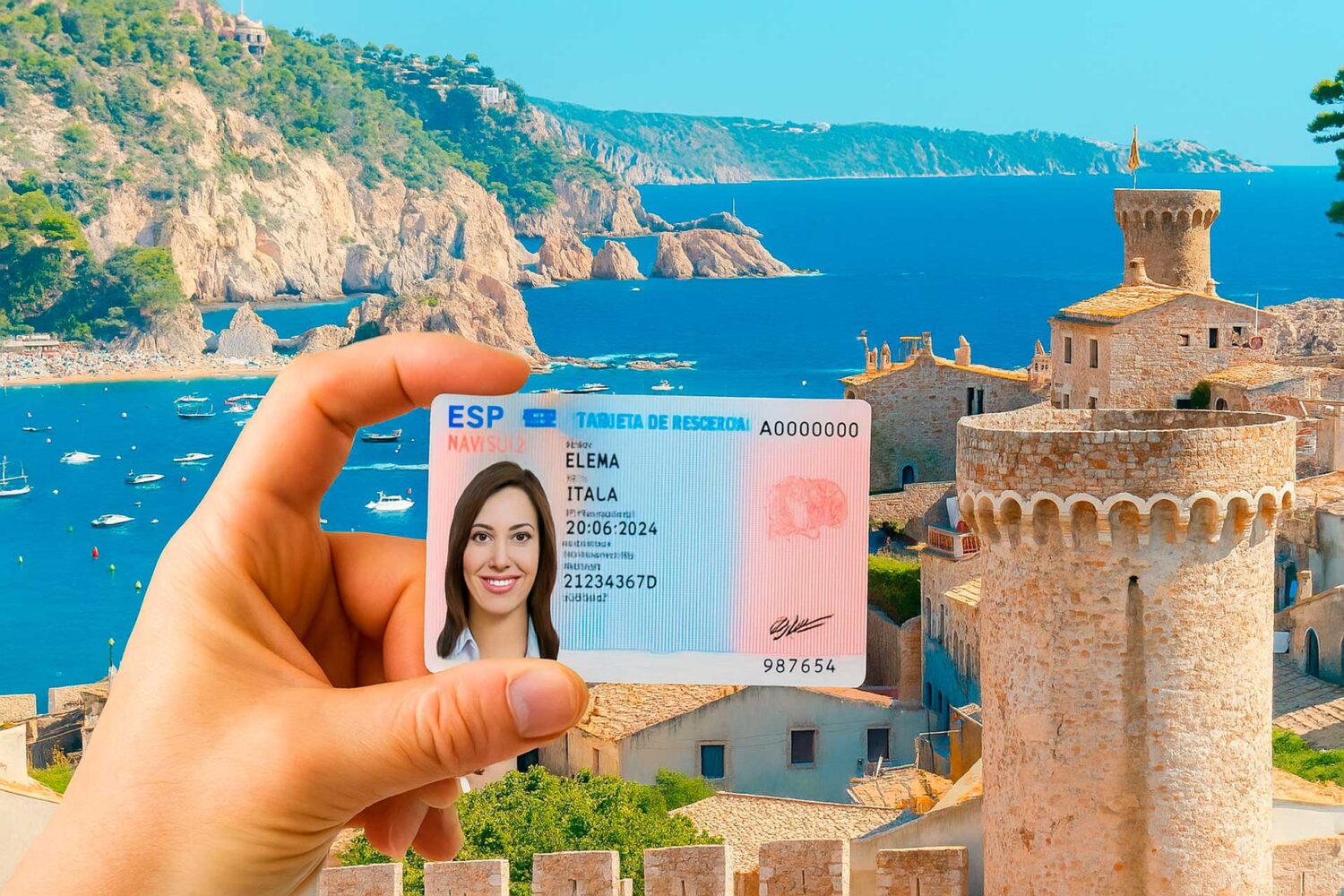
How to Apply for a Spanish Residence Permit (Step-by-Step)
Applying for a Spain residence permit involves multiple stages. Here’s a step-by-step guide to the general process, from preparation to obtaining your card:
- Research and Choose the Right Permit Type: Determine which Spanish residence permit fits your situation and goals. As outlined above, the type of visa varies if you’re a worker, student, retiree, etc. Check the eligibility criteria for that permit to make sure you qualify. It’s crucial to get this step right – applying under the wrong category will lead to denial or a waste of time. For instance, if you intend to work, don’t apply for a non-lucrative visa. If you want to freelance remotely, consider the digital nomad visa instead of a regular work permit.
- Gather Required Documents: Once you know your category, compile the required documentation. While exact docs differ, you will typically need: a valid passport, completed application forms (visa application form and specific EX form), passport photos, a criminal background check certificate, a medical certificate, proof of health insurance, proof of financial means (bank statements, income letters), proof of accommodation in Spain (if required), and any category-specific documents (e.g. an admission letter for students, a job contract and employer’s work authorization for employees, a business plan for self-employed, a marriage/birth certificate for family applications, etc.). Ensure all foreign documents have the apostille and Spanish translation as needed. It’s a good idea to create both originals and photocopies of everything. Consult the Spanish consulate’s checklist for your country, as requirements can have slight local variations.
- Submit the Application (Consular Stage): If you are outside Spain, you will generally submit your application at the Spanish Embassy or Consulate with jurisdiction over your place of residence. Call or check the consulate’s website for the visa application procedure – many require making an appointment in advance. At the appointment, you will hand in your application forms and documents, and pay the visa fee. The consular officer may ask you some questions (especially for visas like non-lucrative or family reunion, a short interview to verify your intentions). They will then keep your passport as the visa is processed (or have you come back to pick it up later). Processing times at the consulate vary: typically around 1 month for many long-stay visas, but it can take up to the legal maximum of 3 months in some cases. Some visas are faster – for example, the **Golden Visa and some work visas were required to be processed in 10–20 working days by law. During the waiting period, be responsive if the consulate requests additional documents or clarifications. Note: A few categories (like EU family member cards or certain permit modifications) can be applied for from within Spain directly, but for most first-time non-EU residency, you apply from your home country’s consulate.
- Receive Visa and Travel to Spain: If approved, the consulate will affix a visa stamp in your passport. For long-term stays, this is usually a D-type visa (national visa) that allows a single entry into Spain for the purpose of obtaining your residence card. Check the visa’s validity dates. Often, the visa will be valid for 90 days (or up to 6 months in some cases) for you to enter Spain. You must travel to Spain during that window. Upon entry, the border will stamp your passport – keep your travel records as you’ll need to prove entry date for the next step. If your visa is denied, the consulate will return your passport with a refusal letter explaining the reason (and you typically have the right to appeal the decision or reapply after addressing the issues).
- Register in Spain and Get Your TIE: After arriving in Spain, you need to register with the immigration authorities to obtain your Foreigner Identity Card (TIE). This step is done in Spain at the local Oficina de Extranjería or designated police station. Typically, you must apply for the TIE within 30 days of arrival. The process involves: filling out a TIE application form, paying a card fee (~€15 at a bank using form 790), and making an appointment for “toma de huellas” (fingerprinting). At the appointment, you’ll provide your passport with visa, copies of your visa and entry stamp, your local address, photos, and the documents proving your visa approval. The officials will take your fingerprints and then issue a resguardo (receipt). A few weeks later, you return to pick up your plastic TIE card. The TIE card will serve as your official identification in Spain, containing your NIE number, permit type, and validity. Additionally, some regions require registering your address on the padrón (municipal register) at your town hall, which is recommended as it’s needed for many services.
- Complete Any Additional Formalities: Depending on your situation, there may be a few more things: If you came on a work visa, you’ll need to register with social security and your employer will activate your work contract. Students should enroll in their institution and can register for a NIE as well (students get a NIE on their TIE). Family members might need to validate foreign marriage or birth certificates with local civil registry if desired. EU citizens registering will get a green certificate rather than a TIE, and they must request it at the police within 90 days of arrival. It’s also smart to open a bank account, get a local SIM card, and familiarize yourself with Spain’s public services.
- Maintaining and Renewing Your Permit: After you have your residence permit, be mindful of its expiration date. Mark your calendar for when to renew (typically, renewals can be filed within 60 days before expiry, and up to 90 days after expiry in late, but it’s best not to wait). For renewals, you’ll again prove that you still meet the conditions (income, insurance, etc.) though renewals are usually easier than initial applications. Also, maintain compliance: e.g., non-lucrative residents should avoid working in Spain; students must actually study and not just hold a visa; workers should stick with authorized jobs or update the permit if changing jobs. Spending excessive time outside Spain can also jeopardize renewals – most temporary permits expect you to spend at least 6 months per year in Spain (for permanent residency, you shouldn’t be out more than 12 consecutive months, or 30 months total in 5 years). After 5 years, consider applying for long-term residency, and after enough years, you might pursue citizenship (more on these below).
Throughout the process, stay organized and informed. Always keep copies of what you submit. If possible, consult professionals if you have doubts, especially for complex cases. The Spanish immigration bureaucracy can be nuanced, but if you follow the steps diligently, you’ll navigate it successfully and start your new life in Spain.

Processing Time and Fees
How long does it take to get a Spanish residence permit approved, and how much does it cost? These are common practical questions. Processing times and fees can vary by permit type and individual circumstances, but here’s a general overview for 2026.
Processing Times: Spain’s immigration law sets some target timelines. In practice:
- Consular visa application: For most long-stay visas (work, non-lucrative, student, family reunification), expect around 1 to 2 months for processing. Legally, the maximum is 3 months. Some consulates are faster (a well-prepared non-lucrative visa might come in 3–5 weeks; student visas often take 2–4 weeks since they coincide with academic calendars). Family reunification visas are processed after the internal approval, so once you have the authorization letter, the visa issuance is usually quick (a week or two).
- Work permit authorization: If your employer in Spain is applying for your work permit at the immigration office, that decision typically takes up to one month (for highly skilled roles under the entrepreneur law) to three months (for regular work permits) by regulation. Recent regulatory changes in 2022 aimed to expedite certain cases, but plan on a few months. Only after approval can you get the visa from the consulate, which might add a couple more weeks.
- **Golden Visa / Investor & Digital Nomad Visa: These have expedited processing by law – 20 working days for a decision on the residence authorization. In many cases, applicants got an answer in 2–3 weeks. If no answer by 20 days, it’s approved by positive silence. This was a big selling point of the Golden Visa. The Digital Nomad visa is processed by UGE (Large Enterprises Unit) and similarly quick (10 business days for visa, 20 days for the permit).
- After arrival (TIE card): Getting your actual residence card in Spain can take another 2–4 weeks depending on appointment availability. In large cities, booking a fingerprint appointment can sometimes cause delays, but once fingerprints are given, cards are printed in about 3–4 weeks. In smaller towns, it might be faster.
- Overall: From initial application to having the TIE in hand, most people are looking at roughly 2–3 months if everything goes smoothly (except in very fast-track categories). It’s advisable to apply as early as allowed and not make irreversible plans (like quitting jobs or shipping belongings) until your visa is granted.
Fees:
- Visa Application Fee: This is paid at the consulate when you apply. For national long-term visas, it’s often €80 for adults (standard Schengen visa fee). However, fees can vary by nationality due to reciprocity – for example, U.S. citizens paid around $160 for Spanish visas (because the U.S. charges similar to Spaniards). Some consulates list specific fees: e.g., a non-lucrative visa might be €80; a work visa might be €80 or higher for certain nationalities. Check your consulate’s website. Often student visas are slightly lower (sometimes ~€60) or free for certain scholarship holders.
- Residence Permit Fees: There are separate administrative fees in Spain for the issuance of the residence authorization and card. For instance, when your employer’s work authorization is approved, there’s a fee (~€76 for an initial work permit). Non-lucrative and family reunification authorizations have fees (around €10–€20, sometimes). When you apply for the TIE card, you pay a fee (Modelo 790 Código 012 or 013) around €16 for the card issuance. These fees are generally not huge – on the order of tens of euros – and are paid to Spain’s government (often at a bank prior to your appointment).
- Golden Visa fees: While the program ran, it had somewhat higher fees (the initial visa could be around €70–€80, and the residence authorization around €70, plus each dependent had similar fees). But relative to the investment, those fees were negligible.
- Translations and Legalizations: Though not a fee paid to the government, factor in the cost of getting documents apostilled and translated by a certified translator, which can be a few hundred euros in total depending on how many documents.
- Other costs: If you use a lawyer or immigration advisor, that’s an additional cost (varies widely). Also, health insurance premiums – a private policy for a 30-year-old might cost ~€50–€70 per month; for an older retiree could be €150–€200 per month or more. These aren’t fees to the state, but part of the cost of fulfilling requirements.
Spain doesn’t have exorbitant government fees for visas compared to some countries. The main “costs” are often indirect: showing large sums in the bank (not a fee, but a requirement) or making an investment (for investor visa). One should also consider tax implications – e.g., if you become a tax resident, there may be taxes on worldwide income – but that’s outside the scope of application fees.
Tip: Always get a receipt for any fee paid. And ensure you pay the correct amount; underpaying or overpaying can complicate things. The consulate or office will give instructions on payment method (some require money orders or cashier’s checks, others allow cash or credit card). For the TIE, you’ll use a Spanish bank. Keep small bills on hand for paying exact amounts if needed.
In summary, patience is key with processing times – apply well in advance of your intended move (for students, as soon as you get your acceptance letter; for family, expect a few months; for non-lucrative, start 2-3 months out). And budget for the associated costs – while Spain’s visa fees are modest, don’t forget the cost of insurance, translations, and any professional help you enlist.

Common Reasons for Residence Permit Refusal
Unfortunately, not all applications are approved. Spanish authorities can and do refuse visas or residence permits if requirements are not met or doubts arise. Being aware of common refusal reasons can help you avoid these pitfalls. Here are the frequent causes of rejection:
- Insufficient Financial Means: This is one of the top reasons for denial, especially for non-lucrative and family visas. If you fail to convincingly demonstrate the required income or savings, the visa will be refused. Examples: bank statements showing less money than required, sudden large deposits that look suspicious, or an over-reliance on income streams that aren’t well documented. Ensure your proof of funds clearly exceeds the minimum threshold for the required period (usually showing 6-12 months of financial history helps). Tip: Consulates prefer seeing stable, regular income (pensions, steady investment returns) or a large savings balance, rather than just barely meeting the minimum.
- Inadequate Medical Insurance: Spain mandates private health insurance with full coverage. Applications are commonly denied if the provided insurance policy does not meet the criteria. For instance, if you submit a travel insurance (which has exclusions or caps) or a cheap policy with co-pays or a high deductible, the consulate may reject it. Make sure your policy letter explicitly states coverage is comprehensive with zero co-pay and valid in Spain for the entire stay. Some consulates maintain a list of recommended insurance providers known to meet Spanish requirements. Using one of those can reduce risk.
- Lack of Proof of Accommodation: Some Spanish consulates (not all) require evidence of where you’ll reside in Spain. If an embassy expects this and you don’t provide it, they might refuse the visa. Even though Spanish law doesn’t explicitly list a housing proof for, say, non-lucrative visas, in practice some embassies like those in certain countries do ask. They want to see you have arranged a place to stay (rent or own). If you’re unsure, it’s safer to have a rental agreement or a booking. For family reunification, a housing suitability report is usually mandatory. Failing to include that will result in denial of the family application.
- Missing Schooling Plan for Children: A lesser-known but real reason – if you are moving with kids (generally 6-16 age) on visas like non-lucrative, some consulates want to know how you plan to educate them. It means that not showing a schooling plan (like enrollment in a school) for dependent children can trigger a rejection. This is because education is compulsory and the government wants assurance the children will attend school. The workaround is to secure a spot in a local or international school and show proof (which can be challenging before moving, but some private schools provide pre-enrollment letters). This requirement is not in all countries, but it has been reported in places like the Spanish consulate in Quito, Ecuador, among others.
- Unconvincing Purpose or Intent (Residency “Intent” Issues): If the authorities suspect that you don’t actually intend to live in Spain or that your purpose is not genuine, they can deny the visa. For example, a single applicant applying for a non-lucrative visa while their entire family remains in the home country can raise a red flag that the person might not really relocate to Spain. They fear such individuals just want a back-up residency or easier travel (a Schengen visa). Similarly, if an applicant’s profile suggests they cannot truly maintain residency (like someone with a job or business that physically ties them outside Spain, yet applying for a visa requiring residence in Spain), the application might be doubted. Weak justification or inconsistencies in your story can lead to refusal. Always be honest and clear about why you want to reside in Spain, and align your application materials with that narrative.
- Failing the Consular Interview: Many long-stay visa processes include a personal interview at the consulate. This is not like a job interview, but rather a checkpoint to verify information. Nonetheless, some applicants do poorly – giving vague, contradictory, or concerning answers – which can lead to denial. For instance, if in an interview you casually mention you don’t plan to live in Spain year-round (for a visa that requires residency), you’ve basically given the consulate reason to reject. Or if you cannot explain how you’ll support yourself, or seem unfamiliar with your own documents, it undermines confidence in your application. Treat the interview seriously: be prepared to discuss your plans (where you’ll live, why Spain, what you’ll do day-to-day if not working, etc.), show ties to Spain or genuine interest. Interviews are usually short, but first impressions matter.
- Incomplete or Incorrect Documentation: A very common cause of refusal is simply missing paperwork or errors. If you fail to submit a required document, or something is not translated, or a form is incorrectly filled, the application may be deemed “inadmissible” or get denied after formal assessment. Often, consulates will check documents at submission and give you a chance to correct issues, but not always. Double-check everything. Use the consulate’s checklist and have someone else review your application packet for completeness.
- Previous Visa Violations or Deportations: If you have a history of overstaying a Schengen visa or were deported/removed from Spain or another country, this can lead to refusal. The consulate might view you as high-risk. Depending on severity, you might have a formal ban (which means automatic denial until it expires). Always declare any past visa denials or violations if asked (lying can be worse). If you have a ban, you generally must wait it out or seek legal counsel to lift it.
- Health or Security Risks: If the medical certificate reveals an illness of concern (highly unlikely if you follow guidelines, as the conditions screened are rare in applicants), it could be an issue. Security-wise, a serious criminal conviction (especially related to drugs, violence, etc.) is likely a non-starter for residency.
The good news is that many refusals are avoidable with careful preparation. If your application is refused, the notice will state the reason (or at least the legal basis). Spain typically allows an appeal (recurso) within a certain timeframe (often 1 month for administrative appeal, or up to 2 months for a judicial appeal), but appealing can be complex and slow. In many cases, it’s easier to fix the issue and reapply for the visa. For example, increase your bank balance, buy a better insurance policy, secure housing, etc., then submit a new application.
To minimize chances of refusal: follow all instructions to the letter, don’t cut corners, and present a credible case that you meet or exceed all requirements. If using an immigration lawyer or advisor, they can pre-audit your file for weaknesses. Remember that consular officers and immigration officials have seen it all – any hint of fraud or misleading information will likely be caught and result in a denial (and possibly a ban). So be truthful and thorough.
Renewal, Permanent Residence and Citizenship Path
Obtaining an initial residence permit is just the beginning. Many expats aim to renew and eventually secure permanent residence or even Spanish citizenship. Here’s what to expect after you’ve got your first card.
Renewing Your Residence Permit
Renewals are generally required when your temporary residence permit is about to expire (typically after 1 year for the first permit, then after each 2-year renewal, etc., depending on the permit). A renewal (renovación) extends your right to reside (and work, if applicable) in Spain. Key points on renewals:
Timing: You can apply to renew within 60 days before your permit expires (and up to 90 days after expiration, though it’s not recommended to wait that long). Mark your calendar and start preparing renewal docs a few months in advance.
Requirements to Renew: You must generally continue to meet the conditions of your permit: For work permits: you should have maintained employment (or have a new job) and met social security contributions. There is some flexibility if you had periods of unemployment, but usually you need at least 6 months of work in the year (or an offer in hand). The 2022 reforms made renewals easier even if you worked less, as long as you were actively seeking work.
For non-lucrative: you must show you still have the required financial means (usually same 400% IPREM level) and health insurance coverage for the next period. They may check if you actually refrained from working.
For students: students typically switch to a different status if staying on (like the job-search permit or a work permit). Pure study renewals happen if your program extended or you start a new program (e.g., bachelor to master’s).
For family reunification: you need to show you (the sponsor) still have the economic means required for the family and that the family tie continues (e.g., marriage is still valid, children are still dependent, etc.). Children of school age must be enrolled in school during your stay.
Across the board, having no serious criminal issues during your stay is important (minor infractions usually won’t impede renewal, but something like a criminal conviction could).
Residency days: Ensure you did not spend more than the allowed time outside Spain. For temporary residents, being out more than 6 consecutive months in a year can void your permit in some cases. For renewals, they typically want to see Spain has been your primary residence.
Procedure: Renewals are usually filed in Spain at the immigration office (Extranjería) or online via the Mercurio platform. You submit a renewal application form, updated supporting documents, and pay a renewal fee (often ~€16 to €30 depending on type). The office then processes it (again, up to 3 months). During processing, your status is extended by law. Once approved, you go for a new TIE card (fingerprints again) reflecting the new expiry date.
Duration of Renewals: Most initial permits (except some like student) are 1 year. The first renewal usually grants 2 years of residence. After those 2 years, you renew again for another 2 years if needed (for non-lucrative, work, etc.). There are exceptions: for example, the EU Blue Card can be 2 years initially, then 2 more, etc. Family members often get the same renewal cycle as the sponsor. One big change: as mentioned, non-EU family of Spanish citizens will now get a 5-year card immediately under new rules (no renewal needed every 1-2 years). And for EU family members it’s also a 5-year card from the start.
Upgrades/Modifications: Sometimes instead of a straight renewal, you might modify your permit to another type. For instance, a student who finds a job might apply to modify to a work permit rather than “renew” the student stay. Or a non-lucrative holder might switch to a work permit after residing a year (Spain now allows non-lucrative residents to change to a work visa after the first year, provided they find an employer and meet conditions). These modifications usually happen at renewal time and have their own procedures, but they ensure you don’t have to leave Spain to start a new permit process.
Overall, renewals are easier than initial applications because you already have a foothold. But you must keep your documentation updated (e.g., renewed insurance policy, new bank statements, etc.). If you’ve integrated into Spain (learning some Spanish, involved in community), that can only help, though it’s not a formal requirement until citizenship.
Permanent Residence (Long-Term Residency)
After a period of legally residing in Spain, you can qualify for long-term residence – this is effectively permanent residency. Spain offers two closely related statuses:
- Residencia de larga duración (Spain’s national long-term resident status)
- Residencia de larga duración-UE (EU long-term resident status)
Both are obtained after generally 5 years of continuous legal residence in Spain (the EU version also requires proving certain integration and stability, but it’s similar). “Continuous” means you haven’t left Spain for more than 6 consecutive months at a time, and not more than 10 months total in those 5 years (or 12 months total for EU long-term status). Some absences like study or work in the EU might not count against you, but the rule of thumb is try to be physically in Spain at least 9–10 months each year.
What Permanent Residency Gives You: Long-term residence allows you to live and work in Spain indefinitely, under the same conditions as Spaniards. You no longer have to renew every few years – the status is permanent (though the card itself needs to be renewed every 5 years for the physical card update). You can work in any sector (no restrictions, no need for new work permits if you change jobs). You also keep access to social services. Essentially, you’re a permanent resident, just not a citizen (no voting in national elections, etc., but you can vote in local EU elections if EU long-term resident from another EU country).
How to Apply: At the 5-year mark, you submit a long-term residence application (EX-11 form) to the immigration office, showing:
- You have fulfilled 5 years legal and continuous residence (they’ll check their records; providing copies of your TIEs and entry/exit stamps can help).
- You have no serious criminal record.
- (Sometimes) proof of financial means or employment and insurance – the law technically doesn’t require strict income checks for long-term, because it’s a right after 5 years, but in practice they might want to see you’re not destitute. Typically, if you maintained your prior permit till the end, it implies you had means.
- For EU long-term resident status, you might need to show you have stable income and health insurance more explicitly, as that status lets you move to other EU countries under certain conditions.
Long-term residence applications are usually processed within 3 months. If approved, you get a long-term resident card (TIE) that is valid for 5 years and renewable automatically every 5 years (it’s mostly a card renewal, not a re-qualification). If denied, it’s often because absences exceeded limits or some unexplained gaps in your residency.
Benefits: Aside from not having to renew frequently, a major benefit is mobility in the EU. With Spanish long-term (especially the “UE” version), you can move to another EU country and apply for a residence permit there under easier rules (you won’t start from zero – you can, for example, go to France or Germany and get their residence if you have a job offer, without labor market tests). It’s like having EU-wide permanent residence rights, though you do have to process it in the new country. Also, long-term residents in Spain enjoy stronger protection from expulsion and a guarantee that as long as they don’t leave for too long (you lose LTR status if you are outside the EU for 12+ consecutive months, or outside Spain for 6 years), they can live in Spain forever.
For many, getting the “larga duración” after 5 years is a big milestone – it gives stability (less paperwork) and is the step before full citizenship, if desired.
Leave your contacts to have an expert contact you shortly.
Spanish Citizenship Pathway
Citizenship by naturalization (residency) is the ultimate step – it grants you a Spanish passport and all the rights of a Spanish national (including EU citizenship). Spain is known for a relatively long residency requirement compared to some countries, but it has notable exceptions:
General Rule: 10 years of legal, continuous residence is required to be eligible for Spanish nationality. This is one of the longest in the EU. You must have been a legal resident (with any permit, including student years counting half in some cases) for 10 years immediately prior to the application. “Continuous” means you haven’t left Spain for more than 3 months at a time, nor more than 6 months total in a year, in those 10 years (the law isn’t super explicit on short absences, but generally being genuinely resident is required).
Exceptions – 5 years, 2 years, 1 year:
- 5 years if you have recognized refugee status in Spain.
- 2 years for nationals of Latin American countries, Andorra, the Philippines, Equatorial Guinea, or Portugal, and people of Sephardic Jewish descent. This is a significant shortcut: citizens of all Spanish-speaking countries in the Americas (plus Brazil, Haiti etc. – basically former Spanish colonies), as well as those specific nations listed, can apply after just 2 years of legal residence. For example, a Mexican or Argentine citizen only needs 2 years of residence to be eligible. Spain historically allows this due to cultural/historical links. (Sephardic Jews had a special law in 2015 that waived even the residence, but that was a limited-time program which expired; now they fall under the 2-year rule via the Democratic Memory Law if they missed the earlier window).
- 1 year in a few cases: If you are married to a Spanish citizen for at least 1 year and are still married and not separated, you can apply after 1 year of residence as a legal resident (note: the marriage itself doesn’t grant citizenship; it just reduces the wait to 1 year of residence, and you must already have a residence permit, often via family). If you were born in Spain (to foreign parents) and later legally reside for 1 year.If you are the child or grandchild of a Spanish-born citizen (e.g., your parent or grandparent was Spanish). If you are a widow/widower of a Spanish citizen, and at the time of your spouse’s death you were not separated. There are also provisions for children under state guardianship, etc., but those are less common.
So, many Latin Americans find Spain attractive since they can become citizens in 2 years (which actually means after two years, then the application may take 1-2 years to be processed, but still much sooner than 10).
Conditions for Naturalization: It’s not automatic after the time – you have to apply through a formal process:
- Good Conduct: You need to show “good civic behavior” – essentially no significant criminal record, and integration into society. A police clearance from Spain will be checked.
- Language and Culture Tests: Unless you are from a Spanish-speaking country, you must pass the DELE A2 Spanish language exam (basic proficiency) and the CCSE citizenship test. The CCSE is a test on Spanish constitution, society, and culture (like a civics test). Nationals of Latin American countries are exempt from the language test (since they speak Spanish), but they still must do the CCSE. These tests are administered by the Instituto Cervantes and are held worldwide.
- Integration: The civil registry will consider if you’re integrated – do you speak Spanish (if required), do you have ties here (job, family), etc. Also you’ll need to swear loyalty to the King and Constitution when approved, and (in most cases) renounce your prior nationality.
Spain generally does not allow dual citizenship except with those Latin American and specific countries (and some very limited cases). For most people (e.g., an American, Canadian, Indian, etc.), Spain will require you to renounce your previous citizenship when you naturalize. In practice, enforcement varies and some manage to keep both, but officially that’s the rule. Citizens of countries like Argentina, Mexico, Philippines, etc., are allowed to retain their citizenship due to bilateral agreements, which is a big perk.
Timeline: After you submit your citizenship application, it can take quite some time (1-3 years is not unusual) to be resolved because of backlogs. If approved, you’ll be called for a “jura” (oath) at the Civil Registry, after which your data is sent for registration and you can then obtain a Spanish DNI and passport. The 10 (or 2) year clock is just to be eligible to apply; the processing comes after. So planning wise, you might reside in Spain, say, from 2026 to 2036, apply in 2036, and maybe get citizenship by 2038.
In summary, the pathway often looks like this for a typical non-EU immigrant:
Initial permit (1 year) → Renewals (total 5 years) → Long-Term Residence (at 5 years) → Citizenship Eligibility (at 10 years, unless 2-year rule applies).
Many immigrants take advantage of long-term residence to have stability and then decide if citizenship is worth it (considering the dual nationality issue). Spanish citizenship has great benefits (EU passport, wider rights) but also responsibilities (voting, jury duty, etc.) and potential tax implications globally.
Spain also has other ways to nationality (like descent, option for children of Spaniards, etc.), but those are beyond this scope. For the average resident, naturalization by residence is the route, and Spain provides a clear, if lengthy, path to become fully Spanish, capping off the immigration journey.
Conclusion and Next Steps
Moving to Spain is an exciting prospect, and the country offers a range of residence permits to accommodate everyone from international students and remote workers to retirees and entrepreneurs. The process can be paperwork-heavy, but with the right preparation and understanding of the requirements, you can successfully obtain a Spain residence permit and start enjoying life in one of Europe’s most vibrant countries.
In summary, begin by identifying the permit that best matches your situation (non-lucrative, work visa, student, etc.) and ensure you meet the key criteria like finances, health insurance, and clean records. Follow the application steps diligently – attention to detail is crucial for avoiding delays or refusals. Once in Spain, take advantage of integration opportunities (learn the language, embrace the culture) as this will help you in the long run, especially if you aim for permanent residency or citizenship.
Keep track of your permit’s validity and don’t miss renewal windows. After five years, consider applying for long-term residency which grants you more security. And if your goal is to sink permanent roots, Spain’s nationality process awaits down the line – it may be a lengthy path, but the reward is the ability to truly call Spain your home country.
If you’re considering applying for a Spanish residence permit, start gathering your information and plan ahead. Check the official Spanish immigration portal for up-to-date forms and instructions, and don’t hesitate to seek professional advice for your specific case. Each situation is unique, and an immigration lawyer can provide personalized guidance to maximize your chances of success. Spain warmly welcomes those who follow the legal steps to reside in the country – your Mediterranean dream can become a reality. Prepare thoroughly, stay informed on current regulations, and soon you could be enjoying your new life under the Spanish sun.
Leave a Comment

We have prepared answers to the most common questions about Spain residence permit. If you want to clarify anything, please contact us - we will provide detailed explanations.
EU/EEA (and Swiss) citizens have the right to live and work in Spain without needing a visa or residence permit. However, if they stay longer than 3 months, they must register with Spanish authorities and obtain an EU Certificate of Registration (a simple residency certificate) and an NIE number. This isn’t a “permit” in the traditional sense, but it’s a required registration. Their non-EU family members, though, do need to apply for a EU family member residence card.
If you are not an EU citizen, you can stay in Spain (and the Schengen Area) up to 90 days within any 180-day period as a visitor. Beyond 90 days, you need a residence permit or long-stay visa. EU citizens can stay up to 3 months without any formality, but after 3 months should register as described above. Always keep track of your days to not overstay the 90-day rule, as overstaying can lead to fines or difficulties in the future.
Spain is considered relatively accessible for residency compared to many EU countries, especially for retirees, remote workers, students, and family members. Approval depends on meeting clear financial, legal, and documentation requirements.
Yes. With a valid Spanish residence permit (temporary or permanent), you can travel freely for up to 90 days in any 180-day period to other countries in the Schengen Area. You won’t need a separate visa for those short trips. Your Spanish TIE, along with your passport, is sufficient for entry at Schengen borders. However, the permit doesn’t let you live or work in another EU country. Also note, travel to non-Schengen EU countries (like the UK, which is not in Schengen) will still be subject to their normal entry rules.
Simply holding a residence permit doesn’t automatically make you a tax resident – what matters is how many days you actually spend in Spain. Under Spanish law, if you stay in Spain for 183 days or more in a calendar year, you are considered a tax resident, meaning you must report worldwide income in Spain. Many residence permits (like non-lucrative) actually expect you to live at least 183 days in Spain, so yes, in those cases you’d be a tax resident.
No. The non-lucrative visa prohibits any professional or lucrative activities in Spain. You cannot be employed by a Spanish company or perform paid work for local businesses. It is meant for retirees or those living on passive income/savings. You are allowed to manage your overseas investments or businesses (e.g., live off rental income, dividends, remote work for a non-Spanish company), but if your intention is to work in Spain, you should seek a work permit or the digital nomad visa. Working illegally on a non-lucrative visa can lead to losing your residency. After one year on a non-lucrative visa, it is possible to modify it to a work permit if you find an employer and meet the conditions – you’d apply for a modification without leaving Spain.


Comments
No comments found.