

 EU Citizenship
 Slovenian Citizenship
 Romanian Citizenship
 Bulgarian Citizenship
 Austrian citizenship (investments)
 Spanish Citizenship
 Italian Citizenship
 Cypriot Citizenship
 Lithuanian Citizenship
 Portuguese Citizenship
 French Citizenship
 German Citizenship
 Hungarian Citizenship
 Dutch Citizenship
 Belgian Citizenship
 Croatian citizenship


UK Residence Permit: How to Apply, Types, and Benefits

Author: Leon Scott
Published: 01.11.2025
Updated: 17.12.2025
The United Kingdom is a popular destination for people around the world seeking to live, work, or study in a country with a high standard of living, excellent education, and diverse opportunities. In 2021, about 9.6 million people living in the UK were born abroad (with 6.0 million of them not holding British citizenship), showing how significant immigration is to the UK. If you plan to join their ranks, you will need a UK residence permit – essentially, legal permission (a visa or immigration status) that allows a non-British person to reside in the United Kingdom.
This article explains what a UK residence permit is (and what a Biometric Residence Permit card is), the types of permits available, how to apply through official UK government programs, and the benefits and responsibilities that come with UK residency. We’ll also address common questions like “how to get a UK residence permit for non-EU nationals or Indian citizens,” what rights you gain, where you can travel with a UK residence permit, and how the process differs for EU citizens after Brexit. A friendly, step-by-step breakdown is provided for non-specialist readers – but always remember that immigration rules are complex and changeable, so consulting a qualified immigration lawyer is advisable for personalized guidance.
What is a UK Residence Permit
“UK residence permit” is a general term for any legal immigration status that allows a foreign national to live in the United Kingdom for a length of time. In official UK terminology, having a residence permit means having “leave to remain” in the UK. There are two main forms of leave to remain: limited leave to remain (a temporary permission for a fixed period) and indefinite leave to remain (ILR, permanent permission to stay without time limit). The previous concept of a standalone “residence permit” document has essentially been replaced by proof of one’s leave to remain status. In other words, if you hold a valid UK visa or ILR, you have a UK residence permit, even if the term “residence permit” isn’t formally written on your visa sticker or decision letter.
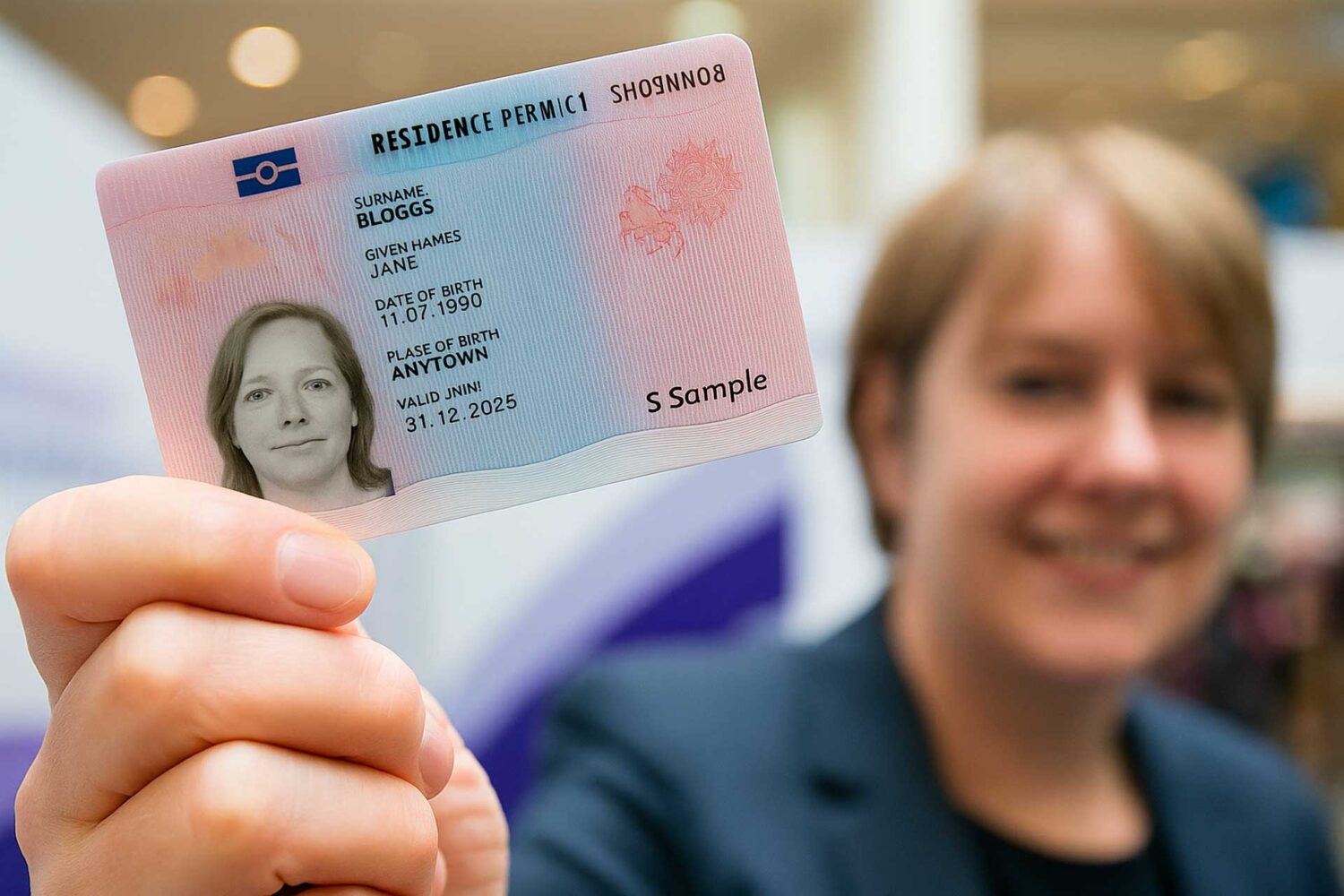
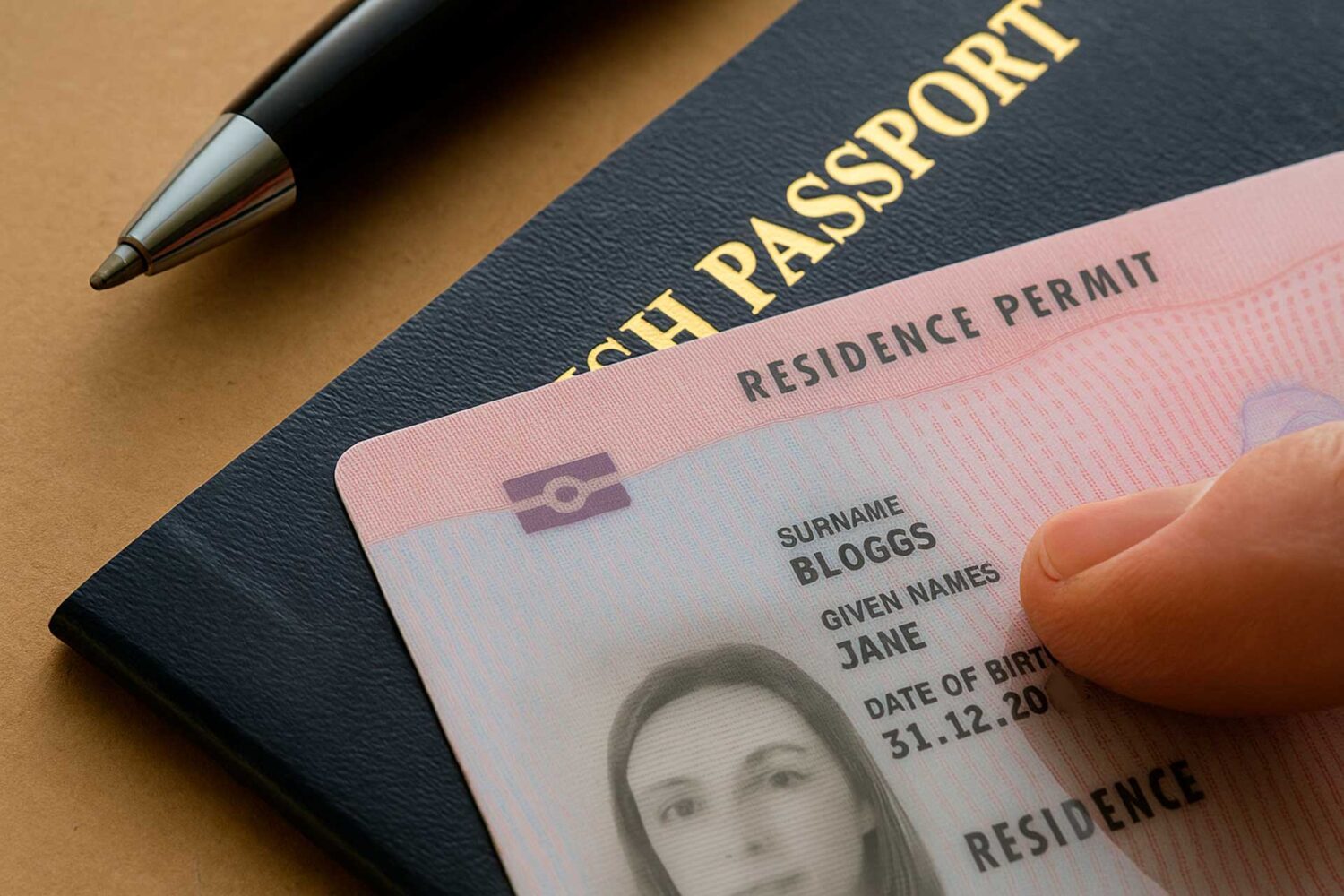
For many years, foreign residents in Britain have been issued a Biometric Residence Permit (BRP) card as physical evidence of their immigration status. The BRP card – often titled “Residence Permit” – holds your biographic details and biometrics (photo and fingerprints) and shows your immigration status and entitlements in the UK. This credit-card sized document is very secure (polycarbonate with an embedded chip) and looks similar to residence cards issued in some EU countries.
Importantly, since 2025 the UK is phasing out physical BRP cards in favor of a digital system: all BRP cards were set to expire on 31 December 2024, regardless of the actual visa end date, because the Home Office is moving to online electronic visas (eVisas) as proof of status. New residents now get a digital immigration status (accessible via a UKVI online account) instead of a card, though if you applied from overseas and were told you’d get a BRP, you may still receive a card for now during the transition. The digital status serves the same purpose – confirming your leave to remain – but you will use an online UK residence permit check service to prove your rights, rather than a physical card.

Types of UK Residence Permits (Temporary vs Permanent)
There are two broad categories of UK residence permission: temporary residence (limited leave to remain) and permanent residence (indefinite leave to remain). Below is a comparison of these types:
| Aspect | Temporary Residence (Limited Leave to Remain) | Permanent Residence (Indefinite Leave to Remain – ILR) |
| Duration of Stay | Fixed period (visa valid typically 2–5 years). Must renew or switch visas to extend stay. | No time limit on stay (indefinite permission to remain). The status itself does not expire, though any physical ILR card had to be renewed every 5–10 years. |
| Conditions | Visa conditions apply (e.g. work only for sponsoring employer, no access to public funds, limited work hours on a student visa, etc.). Must continue to meet requirements and obey visa rules to maintain status. | No conditions or restrictions on work or study. ILR holders can live and work freely in any job or business in the UK with no immigration restrictions. |
| Access to Benefits | Generally No access to public funds (most temporary visas have a “no recourse to public funds” restriction, meaning you cannot claim UK welfare benefits). Some services like the NHS healthcare are accessible if you’ve paid the Immigration Health Surcharge, but not benefits like social housing or welfare. | Yes – ILR gives settled status, making you eligible for public funds and welfare benefits just like a permanent resident. This includes things like claiming state benefits or housing assistance if needed. |
| Path to Citizenship | Temporary visas do not give citizenship by themselves. However, time spent can lead to ILR, which is a prerequisite for naturalisation. You must obtain ILR first (usually after 5+ years) before you can become a British citizen. | ILR is the last step before citizenship. After holding ILR for 12+ months (and meeting residency requirements), you can typically apply to naturalise as a British citizen. (If married to a British citizen, you can apply for citizenship as soon as you get ILR, without the extra 12 months.) |
| Loss of Status | Expires if not renewed before its end date. Also can be curtailed or revoked if you violate visa conditions or the reason for your visa ends (e.g. job ends for a work visa). | Lapses only if you leave the UK for an extended period. Normally ILR is lost if you are absent from the UK for over 2 years continuously (for EU settled status, 5 years). Shorter absences do not affect it, and ILR never “expires” from simply being in the UK. However, serious crimes or fraud could lead to ILR being revoked by the Home Office in rare cases. |
As shown above, limited leave to remain is essentially a temporary UK residence permit tied to a specific visa or purpose, while indefinite leave to remain is permanent residency in the UK. A person with limited leave has many of the same day-to-day rights (live, work, study) but with some restrictions, whereas an ILR holder is fully settled. Both types are generally evidenced by a UK Biometric Residence Permit card or eVisa status during the period of validity.
Who Needs a UK Residence Permit?
Anyone who is not a British or Irish citizen needs permission to live in the UK. This includes non-EU nationals and (post-Brexit) EU nationals as well. If you are coming for only a short visit (e.g. tourism under 6 months), you might just need a visitor visa or even no visa if you’re from a visa-exempt country. But for any stay longer than 6 months, or to work or study, you must apply for the appropriate UK visa/residence permit in advance.
- Non-EU nationals. The UK has a visa requirement for many countries. For example, an Indian national or a Nigerian national cannot simply move to the UK without a visa; they must qualify through one of the official immigration routes (work, study, family, etc.). Even nationals of countries who can visit the UK visa-free (like Americans or Australians) will need a residence permit (visa) if they plan to stay beyond the visitor limits or to work. In summary, if you are not a UK or Irish citizen, plan on obtaining a United Kingdom residence permit for any meaningful long-term stay. This is why queries like “how to get a UK residence permit for non-EU nationals” are popular – the process applies to people from India, China, the USA, and everywhere else.
- EU/EEA/Swiss nationals. The rules changed after Brexit. Up until December 31, 2020, EU citizens had free movement rights in the UK – they didn’t need any permit to live and work. To protect those already in Britain, the government created the EU Settlement Scheme (EUSS). Under this scheme, EU/EEA/Swiss citizens (and eligible family members) living in the UK before 2021 could apply for settled status (if 5+ years residence) or pre-settled status (if less time). Over 6 million applications were received by the June 30, 2021 deadline, with about 5.45 million grants of status (the rest pending or withdrawn). Settled status is effectively indefinite leave to remain (permanent residence) under UK law, and pre-settled is a limited leave (5-year) that can later be upgraded to settled status. If you hold settled or pre-settled status, that is your UK residence permit. However, new EU citizens arriving after 2020 are treated like other foreigners – you can visit up to 90 days without a visa (short trips), but to move to the UK for work, study, or family, you must qualify for a visa under the post-Brexit immigration system. (One exception is Irish citizens, who are not affected by these changes – thanks to the Common Travel Area arrangements, Irish nationals can live and work in the UK freely without any visa or residence permit, as they could before.)
In summary, if you’re planning to make the UK your home (temporarily or permanently) and you’re not a British/Irish national, you will need to apply for a residence permit in the UK through one of the official immigration routes discussed below.

Official Pathways to Obtain a UK Residence Permit
The UK offers a range of official immigration programs through which you can obtain a residence permit. Each program is designed for a particular purpose or category of immigrant. It’s important to choose the visa category that matches your situation and goals – whether it’s work, joining family, studying, or investing in a business. Below, we outline the main types of visas (residence permits) and who they’re for. All these routes are part of the UK’s points-based immigration system or related rules, and they are the only legal way to get UK residency (aside from asylum/refugee routes). We will focus on the major programs and official UK government schemes.
Work Visas (Skilled Workers and Others)
If your plan is to move to the UK for employment or professional opportunities, a work visa is the typical route. The flagship work visa is the Skilled Worker Visa, which replaced the older Tier 2 (General) visa. To get a Skilled Worker visa, you need a job offer from a UK employer who is a licensed sponsor, for a job at a required skill level and with a salary meeting a set threshold. English proficiency is also required. This visa grants you a UK residence permit for the length of your work contract (up to 5 years at a time). Crucially, it can lead to ILR (permanent residence) after 5 years of continuous work in the UK. Many non-EU nationals take this route – for example, it has been very popular among Indian professionals. In fact, in 2024 Indian nationals received 22% of all work visas issued by the UK (over 81,000 out of ~369,000 work visas) – the highest of any nationality – reflecting how significant the Skilled Worker and related visas are for Indian citizens and others seeking UK jobs.
Other work-related visas include:
- Health and Care Worker Visa. A subcategory of the Skilled Worker specifically for medical professionals (doctors, nurses, etc.) with job offers from the NHS or care sector. It has lower fees and faster processing, given the demand in healthcare. (Notably, Indians also made up a large portion of these; out of those 81k work visas to Indians in 2024, about 37% were Health/Care visas.)
- Global Talent Visa. For leaders or potential leaders in certain fields (science, engineering, academia, arts, tech). You need an endorsement from a designated body (like the Royal Academy for scientists or Tech Nation – though Tech Nation was replaced by a new endorsing body for tech talent). This visa is highly desirable as it does not require a specific job first, and it allows great flexibility. It can lead to ILR in as little as 3 years if you were endorsed under certain exceptional talent criteria. It’s meant for top talents with significant achievements or promise.
- Innovator Founder Visa. This is a route for entrepreneurs who want to start and run an innovative business in the UK. It replaced the old Innovator Visa in 2023 (and before that the Tier 1 Entrepreneur). You need a business plan that is innovative, scalable, and approved by an endorsing body. There’s no specific minimum investment amount, but you must show sufficient funds and a solid plan. Innovator Founder visas are typically granted for 3 years and can lead to ILR after 3 years if your business meets certain milestones and you continuously operate in the UK. This visa is essentially the UK’s way of attracting start-up founders and investors who will actively build businesses (rather than passive investors).
- Global Business Mobility visas. These are a set of specialized work visas (introduced in 2022) for specific scenarios, like intra-company transfers, expanding a business to the UK (the UK Expansion Worker visa), secondments, etc. For instance, the Senior or Specialist Worker Visa (replacing Tier 2 Intra-Company Transfer) allows multinationals to send key staff to their UK branch. These particular visas generally do not lead to ILR on their own – they’re often used for temporary assignments. However, one could potentially switch from these to a Skilled Worker visa if circumstances allow, and then pursue settlement.
- Seasonal and other temporary work visas. The UK has visas for short-term work like the Seasonal Worker (e.g. farm work for up to 6 months), creative or sporting workers, charity workers, etc. These are strictly limited in duration and purpose and do not lead to permanent residency.
On a work visa, you can usually bring immediate family (spouse/partner and children) as dependants, who then also receive residence permits. Work visa holders and their dependants can use the NHS (after paying the required Immigration Health Surcharge as part of the application) and children can attend UK schools. However, most work visas have no access to public funds, meaning you cannot claim welfare benefits. After 5 years of working (in a category that leads to settlement), you can apply for ILR. The work you do must remain within the visa’s rules (e.g. only working for your sponsoring employer unless the visa allows other work). If you lose your job or quit, you may have to find another sponsor or leave the UK if on a sponsored visa.
Family Visas (Joining Spouse, Partner, or Family in the UK)
The UK offers family-based residence permits for those who have close family who are British or settled in the UK. The most common is the Spouse or Partner Visa. If you are married to or in a long-term relationship with a British citizen or someone who has ILR/settled status (or has a limited visa under certain categories), you can apply to join them. There are strict requirements: you must prove your relationship is genuine, legally married or living together for at least 2 years (for unmarried partners), and the UK partner must meet a minimum income threshold (£18,600 per year, higher if children are also sponsored) or have sufficient savings. English language ability is also required from the applicant. If approved, a spouse/partner visa is usually given for 2.5 years (30 months), after which you renew for another 2.5 years. After 5 years total, you can qualify for ILR (permanent residence) via the family route.
Other family visas include:
- Fiancé(e) Visa for those engaged to a British/settled person and intending to marry in the UK. It’s a short 6-month visa solely to allow the marriage to take place in the UK. Once married, the person must switch to a Spouse Visa to remain longer term; time on the fiancé visa does not count toward the 5-year ILR clock.
- Child Visa if you are settled/British and have a non-British child abroad, you can bring them as a dependent. Usually, if both parents are in the UK (or one is British and the other is applying), the child can get a visa. Different rules apply if one parent is abroad. Children under 18 can get a visa in line with the parent’s visa status.
- Parent Visa if you have a British or settled child in the UK (under 18), and you’re a foreign parent without a partner, you might apply to join your child in the UK. You must have sole or significant responsibility for the child, among other criteria.
- Adult Dependent Relative Visa this is only for very exceptional cases – e.g. an elderly parent of a British citizen who requires long-term care that can only be provided by their UK relative. The requirements are very tough, and these visas are granted only in compassionate circumstances (and require the UK sponsor to financially support the relative).
Family route visas typically also have no recourse to public funds conditions (until ILR is achieved), meaning the UK sponsor has to support the family. But the benefits of a UK residence permit via family are that you can live with your loved ones, work or study (spouse/partner visa has no work restrictions), and eventually settle and even naturalize as a British citizen. For instance, a foreign spouse who gets ILR can then apply for citizenship after 12 months on ILR (unless married to a British citizen, in which case they can apply immediately after ILR). Many immigrants from various countries (India, USA, Nigeria, Pakistan, EU countries, etc.) use the family route each year to make the UK their home through marriage or family reunion.
Study Visas (Student and Graduate Routes)
The UK is home to world-class educational institutions and has long attracted international students. If you want to study in the UK, you will need a Student Visa (formerly Tier 4). You must have an unconditional offer from a licensed UK educational institution, and you must show proof of finances to support yourself (and pay the course fees), as well as an adequate level of English. A Student Visa allows you to live in the UK for the duration of your course (e.g. a 3-year degree) plus a short time after (usually 4 additional months for courses over 1 year). Students can work part-time (usually up to 20 hours per week during term, full-time in vacations) but cannot access public funds. They can also bring family (spouse and children) only if studying at the postgraduate level (master’s/PhD) or certain government-sponsored programs – recent rule changes in 2024 have restricted students from bringing dependants unless it’s a PhD or research program.
A Student Visa itself is a temporary residence permit and does not directly lead to ILR. However, time spent as a student does count if you later pursue the 10-year long residence route (a lawful resident for 10 continuous years can apply for ILR on that basis, combining any legal categories). More practically, the UK now offers a Graduate Visa (Post-Study Work) for students who complete a degree in the UK: if you get a bachelor’s or master’s degree, you can stay for 2 additional years; PhD graduates get 3 years. The Graduate Visa lets you work in any field without sponsorship during that period. It’s a great way to start a career in the UK after studies. However, the Graduate Visa cannot be extended beyond those years and doesn’t lead to ILR by itself. It’s meant to be a bridge to help graduates find a long-term sponsored job. If during or after your Graduate visa you find a qualifying job, you can switch into a Skilled Worker visa, which then puts you on the path to settlement.
In summary, the Student route is ideal for education, but anyone wanting to stay on must plan to switch to another visa later. The time as a student can be a stepping stone. Many international students (from India, China, Nigeria, USA, EU, etc.) study in the UK annually – in fact, after China, India sends the most students to UK universities (over 92,000 Indian students received UK study visas in 2024). Studying can be the first phase of one’s UK journey, followed by work or family pathways to ultimately get a longer-term residence permit.
⚖️ Stuck with a complex immigration case? Let Consiliojus’ licensed lawyers handle it for you. Avoid errors, save time, and get expert guidance from start to finish. 👉 Book your consultation today.
Business and Investment Visas
For wealthy investors or entrepreneurs, the UK historically had an “investment visa” pathway. The most notable was the Tier 1 Investor Visa, often dubbed the “golden visa,” which allowed high-net-worth individuals to gain residency by investing £2 million or more in UK assets. However, this program was closed in February 2022 due to security concerns and misuse. The government found issues with illicit money and questioned the route’s value to the UK, so they shut it down abruptly. Simply put, you can no longer obtain a UK residence permit purely by passive investment. There is currently no direct replacement for the Tier 1 Investor route.
Instead, the UK has shifted focus to active investment through business. As mentioned, the Innovator Founder Visa is now a key route for those who have funds and want to start an innovative business in the UK. It’s not as simple as just having money; you need a solid business idea that will create jobs or growth. The Home Office explicitly stated that settlement (ILR) for investors will now depend on “genuine job creation and other tangible economic impacts” – “passively holding UK investments will no longer be enough to obtain settlement”. This underscores that if you want UK residency by investment, you really need to be involved (as an entrepreneur or a talent contributing to the economy).
Another route sometimes classed here is the UK Expansion Worker Visa (under Global Business Mobility), which allows a foreign company to send a representative to set up a UK branch. It’s a temporary visa (doesn’t lead to ILR directly), but if the business succeeds, one could switch to a different category later.
There are also visas like the Start-up Visa (which was for new entrepreneurs, usually younger or first-time business founders, but this route has been closed to new applications in 2023 and merged into the Innovator scheme). Additionally, UK Ancestry Visa is worth noting: it’s not an investment, but if you have a UK-born grandparent and are a Commonwealth citizen (e.g., from Canada, Australia, India, etc.), you can get a 5-year UK Ancestry visa to live and work in the UK. This visa can be renewed and does lead to ILR after 5 years like any work visa. It’s a unique route based on family heritage rather than immediate family or job offer.
Humanitarian and Other Routes
While not the focus for most readers planning an immigration strategy, it should be mentioned that seeking asylum or refugee status is an official (though very specific) route to a UK residence permit. If you are fleeing persecution and granted asylum, you receive refugee status, which comes with an initial 5-year residence permit (and then can apply for ILR). There are also discretionary visas for those granted leave outside the rules on compassionate grounds, etc., but these are rare cases.
Another category is the EU Settlement Scheme which we discussed for EU nationals — while now closed to new arrivals, those with pre-settled or settled status under that scheme should be aware of their rights. Pre-settled status is a temporary 5-year permit (it is literally limited leave to remain under UK law), and one must apply to upgrade to settled status (ILR) after accruing 5 years residence. The government has even proposed in 2023-2024 that those with pre-settled status might automatically be upgraded to settled status if they meet the criteria, to avoid people falling through the cracks when their pre-settled expires. But as a pre-settled person, it’s safest to make sure you apply for the permanent status when eligible.
Finally, the UK has various short-term visas (like visitors, short business trips, exchange programs, etc.), but since they generally don’t confer residency longer than 6 months, they aren’t “residence permits” in the context of this article.
Leave your contacts to have an expert contact you shortly.
How to Apply for a UK Residence Permit (Visa)
The application process for a UK residence permit will depend on which visa route you are pursuing (work, family, study, etc.), but there are common steps and requirements across most categories. Here’s a general overview of how to apply for a UK residence permit through official channels:
- Research Your Eligibility and Choose the Right Visa. First, determine which category you fall under – work, family, study, etc. The UK government’s official website (GOV.UK) has a “Check if you need a UK visa” and guides for each route. For example, if you have a job offer, you’d look at Skilled Worker criteria; if you intend to start a business, review Innovator visa requirements; if your spouse is British, check spouse visa rules. Ensure you meet key requirements (qualification, salary, English, maintenance funds, relationship evidence, etc. as applicable). This step answers “how to get a UK residence permit” in the sense of what route you can use.
- Prepare Required Documents. Each application will require documentation. Common documents include your passport, proof of the condition (e.g. a Certificate of Sponsorship for work visas, or a marriage certificate for spouse visas, university Confirmation of Acceptance for Studies for student visas), financial statements to show you have enough money or that your sponsor earns enough, English language test results (like IELTS) if required, TB test results for applicants from certain countries, and so on. Gather these and ensure they are translated to English if originally in another language.
- Online Application Form. Almost all UK visa applications are done online at the official UK Visas and Immigration (UKVI) website. You will create an account, fill out the form specific to your visa type, and submit it electronically. The form will ask for your personal details, travel history, and questions to ensure you meet the specific visa rules.
- Pay the Fees. As part of the online application, you must pay the visa application fee (varies by visa type and whether you choose any priority processing). You’ll also usually pay the Immigration Health Surcharge (IHS) up front, which gives you access to the NHS. For example, a Skilled Worker visa fee might be around £625 to £1,400 depending on duration, plus an IHS of £624 per year of visa. A spouse visa fee is around £1,538 (outside UK) plus IHS. If applying for ILR, the fee in 2025 is £3,029 for a standard application (and no IHS for ILR). Fees change often, so always check the latest amounts. There are optional services: priority processing costs ~£500 extra for a 5-day decision, or super priority ~£800 extra for a 24-hour decision. These can make an already expensive process even pricier. For instance, paying super priority would push an ILR application to over £4,000. Ensure you keep the payment confirmations as part of your application record.
- Biometrics Appointment. After submitting the form and payment, you’ll usually need to provide your biometrics (fingerprints and photo). If you’re applying from abroad, this means attending a Visa Application Centre in your country. If applying from inside the UK, you’ll book an appointment at a UKVCAS (UK Visa and Citizenship Application Services) center. At this appointment, you’ll also often submit your supporting documents (or you might upload documents online in advance, with the new systems). Sometimes it’s just biometrics if you uploaded documents already. Some applicants from certain countries or in certain routes may be able to use a smartphone app to scan their passport chip and do a face scan (this has been introduced for EEA nationals and some others, eliminating the need for in-person biometrics).
- Wait for a Decision. After biometrics and document submission, your application goes into processing. Standard processing times vary – often up to 3 weeks for entry clearance visas (applications from outside the UK) or 8 weeks (2 months) for in-country applications. ILR applications can take up to 6 months by standard service. Using priority or super-priority can cut this to 5 working days or 24 hours respectively for many types. While waiting, you might be contacted for additional information or an interview in some cases (rarely, for certain visas like innovator or if red flags). Most people simply wait for an email decision.
- Receive Decision and Travel to UK / Update Status. If you applied from abroad and your visa is granted, you’ll get a 30-day entry vignette in your passport (or a 90-day vignette currently, due to past pandemic disruptions) to travel to the UK. You must then collect your Biometric Residence Permit card in the UK (often at a designated Post Office) within 10 days of arrival. This BRP card is your actual residence permit card showing the full validity of your visa. If you applied from inside the UK (extension or switching or ILR), you won’t have a passport vignette, but rather your BRP will be mailed to you (or, increasingly, your status is just updated online and you confirm it via your UKVI account). Check the decision letter – it will either provide “share code” instructions for digital status or tell you when the BRP will arrive. If a BRP card is issued, verify that all details are correct (name, date of birth, visa expiry, work conditions) and report any errors quickly for correction.
- After Arrival – Police Registration (obsolete) & BRP Check. In the past, some nationalities had to register with the police upon arrival if staying long-term (it was called police registration and noted on the visa). This requirement was abolished in 2022, so it’s no longer needed. What you should do, however, is keep your BRP card safe (if you have one) and always travel with your passport. The BRP itself is not a travel document; to re-enter the UK you’ll use your passport and, if coming from abroad, you might be asked to show your BRP or explain your status (though nowadays it’s often linked electronically when your passport is scanned). If your BRP card or residence permit is lost or stolen, you must report it and apply for a replacement quickly – there’s a £19 fee for replacing a lost BRP card.
Tip: Always follow official guidance on GOV.UK for your specific visa type, as requirements and forms can change. The above is a generic roadmap. If at any point you are unsure about the process, consider hiring or consulting an immigration lawyer or an OISC-registered immigration advisor. They can guide you especially for complex cases. Remember, the UK immigration system is strict: an incomplete or incorrect application can be rejected, costing you time and money.
UK Residence Permit Renewal and Extension
Many UK residence permits (visas) are granted for a limited time, and you may need to renew or extend them if you haven’t yet qualified for ILR (permanent residence) or if you need more time in your current category. The process for renewal is typically similar to the initial application: you apply online for an “extension” or “further leave to remain” before your current permission expires. For example, a Skilled Worker visa holder after 3 years can apply to extend for another 2 years (up to the 5-year mark for ILR). A spouse visa holder after the first 2.5 years must apply for a further 2.5 years (meeting the financial and relationship requirements again). When renewing, you will again pay a fee and health surcharge, and attend biometrics.
One silver lining is that the fee to renew the physical BRP card itself is only £19 (this fee is typically embedded in the application fee). In fact, the UK residence permit renewal fee is £19 across all permit types just for the card issuance. Of course, the bulk of costs come from the visa application processing fees, not the plastic card. If your Biometric Residence Permit is nearing its expiration date but your visa permission extends beyond that (for instance, many BRPs were set to expire on 31 Dec 2024 regardless of visa length), you will either be instructed on how to update to an eVisa or to apply for a replacement card. As mentioned, after 2 June 2025, expired BRP cards by themselves are no longer valid for travel back to the UK – you’ll need the digital status linked to your passport. So “renewing” a UK residence permit in 2025 and beyond often means making sure your digital status is active and linked, rather than getting a new card.
How to renew UK residence permit? The phrase can mean extending your current visa or simply replacing an expired document. If you have limited leave to remain and want to stay longer, you apply for an extension or a new category of visa if switching. If you have indefinite leave (ILR), that status itself doesn’t expire, but any BRP card tied to it had a 10-year validity (and, as noted, those cards had a hard cutoff of 2024). To “renew” ILR, one doesn’t reapply for ILR (unless it lapsed after a long absence); instead, one would just replace an expired ILR card with a new document (or now use the eVisa system). The £19 replacement fee covers ILR card renewals as well. Always apply before your current leave expires if you need an extension; staying beyond your permission (becoming an overstayer) can jeopardize future applications.
In short, how to renew a UK residence permit depends on your status: for temporary visa holders, it’s about extending your leave by meeting the requirements again; for ILR holders, it may just be getting a new evidence of status. The government encourages people to use their online account to update personal details (like address or passport number changes) and eventually all updates will be digital.
Rights and Benefits of a UK Residence Permit
Holding a UK residence permit, whether temporary or permanent, comes with a variety of rights (and some limitations) that make living in the UK easier. Here are some benefits of having a UK residence permit:
- Live and Work in the UK. Obviously, the primary benefit is the legal right to reside in the UK. If your permit allows work (most do, except some visitor or dependent categories), you can work in the UK either in a specific job or any job depending on your visa type. For example, a spouse or ILR holder can work in any field without restriction, while a Skilled Worker must work for their sponsoring employer (but can take supplementary work in some cases). Regardless, you are contributing to and participating in the UK economy legally.
- Access to Healthcare (NHS). Anyone on a visa longer than 6 months pays the Immigration Health Surcharge and thereby gets access to the National Health Service. This means you can register with a GP (doctor), use hospital services, and receive medical treatment mostly free at the point of use, just like UK citizens. If you have ILR, you don’t even pay the surcharge; you are fully entitled to NHS care as a permanent resident. This is a significant benefit, as private healthcare can be very costly.
- Education for Children and Yourself. If you have children living with you in the UK, they can attend UK schools (state schools) for free (just like resident kids) if you have a residence permit. The UK has excellent schools and universities. As an adult, you can also study (many visas have no restriction on study). Children of residents can also qualify for home student tuition fees at university in many cases (once a parent has ILR or certain visas, depending on rules). Essentially, your family can integrate into the UK education system. The quality of education is often cited as a reason people move to the UK.
- Banking, Housing, and Driving. With a valid UK residence permit, you can open a UK bank account (a necessity for salary, renting, etc.). The BRP card or your digital status is accepted as proof of identity and address status for banking. You can rent property – landlords will check your permit (right-to-rent check) but once cleared, you sign a lease like anyone else. You can also buy property in the UK as a resident (even non-residents can, but as a resident it’s simpler to get mortgages, etc.). Additionally, you can obtain a UK driving license. As a resident, you’re allowed to drive on a foreign license for only 12 months; after that, you should get a UK license. Most visa holders can apply for a provisional license and take a driving test to get a full UK driving license. Having a residence permit is key to all these normal life activities.
- Travel In and Out of UK Freely. A UK residence permit lets you leave and re-enter the UK without applying for entry visas each time. For example, if you have a valid BRP or ILR, you can travel abroad on holiday and come back showing your permit at the border to be readmitted. There is no limit to how many times you can travel in and out, as long as you don’t exceed any absence limits (if you plan to settle or keep ILR, remember the 2-year rule for ILR lapse, or for some visas like student, extended absences might violate conditions). Unlike tourists who can be questioned each time, as a resident you have the reassurance of a standing permission to live here. Note: If you hold ILR or settled status, you can spend up to 2 continuous years outside the UK without losing that status (5 years for EU settled). But if you exceed that, your ILR lapses and you’d need a special returning resident visa to come back.
- Public Services and Benefits. As explained earlier, permanent residents (ILR holders) have access to public funds – this means if life hits a rough patch, they can claim state benefits (like unemployment benefits, housing support, etc.). Temporary residents typically cannot, but they still can use certain public services. For example, NHS is available (because of the health surcharge), and services like policing, fire, etc., are of course available to all. You can also participate in local community life – join libraries, clubs, etc. With ILR, you can vote in local elections (and Commonwealth citizens with any leave can vote in UK elections as well). So being a resident gives you a degree of integration into UK society, even if not all the political rights of citizens yet.
- Pathway to British Citizenship. Perhaps the ultimate benefit – a UK residence permit, especially ILR, is the stepping stone to becoming a British citizen if you desire. Once you naturalize as a citizen, you get a British passport and full rights. But even before that, children born in the UK can benefit: if a child is born in the UK to at least one parent who is a British citizen or has settled status (ILR), that child is automatically a British citizen by birth. If you have a baby while on a temporary visa, the child is not automatically British, but if you later get ILR, you can register the child as British. So your status can directly affect your family’s citizenship opportunities.
In practical terms, having a UK residence permit allows you to build a life in the UK with much of the same access as any other resident. As one immigration firm describes, foreign residents in the UK enjoy privileges such as their children attending excellent British schools, access to free high-quality healthcare (NHS), the ability to rent or purchase property, open bank accounts, and even obtain a UK driver’s license – essentially living as a member of the community. The main things you cannot do until you get citizenship are vote in national elections and hold a British passport (and a few public-service jobs are reserved for citizens). But many find the quality of life and opportunities well worth the journey to obtaining a UK residence permit.
Traveling Abroad with a UK Residence Permit
A common query is “where can I go with a UK residence permit?” Does holding a UK residence permit (especially a Biometric Residence Permit card) allow you to travel to other countries without a visa? The UK is no longer in the EU, so UK residency alone does not grant you freedom of movement in Schengen EU countries. If you are a national of a country that normally requires a visa to visit, say, France or Germany, you will still need a Schengen visa even if you live in the UK (being a UK resident is not enough for Schengen entry).
However, certain countries do offer visa-free or visa-on-arrival access to UK residence permit holders. These are typically countries that consider a UK visa or residence as a sign of trustworthiness. For example, six European countries – Albania, Serbia, Montenegro, North Macedonia, Georgia, and Gibraltar – allow people with a UK BRP to enter without an additional visa. Many more countries around the world do the same: according to one travel guide, as of 2025 there are 37 countries and territories outside the Schengen zone that a UK BRP holder can visit visa-free for tourism. These include places like Turkey (which offers an e-visa on easier terms to UK visa holders), Mexico (180 days visa-free for BRP holders), Barbados (180 days), Albania (90 days), Malaysia, Jamaica, Panama and several Caribbean islands, among others.
Always check the specific country’s policy before travel – each has conditions (for instance, some require that you have used your UK visa to enter the UK at least once before they’ll honor it for visa-free entry, etc.). A crucial point: you must carry your valid passport when traveling abroad. The UK residence permit card alone is not a travel document and will not be accepted in lieu of a passport. Think of the BRP as a supplement to your passport. When you return to the UK, you’ll present your passport and the BRP (or your digital status will be checked) to confirm your right to re-enter.
Also, note that having UK residency does not make you immune to visas for other countries like the USA or Canada – you still need to apply for those based on your nationality. But it’s nice to know that for some holiday destinations, your UK permit is a golden key. For instance, if you’re an Indian national with a UK BRP, you could vacation in Albania or Montenegro without a separate visa, which wouldn’t be possible with just an Indian passport alone. This is a perk of having a United Kingdom residence permit that people don’t often realize at first.
Lastly, consider travel insurance and the fact that as a UK resident, you might be eligible for certain consular supports from your home country’s embassy while in the UK or travelling. And once you attain British citizenship, travel becomes even easier, as a British passport is one of the strongest in the world for visa-free mobility.

Conclusion
Obtaining a UK residence permit, whether it’s a short-term visa or the coveted indefinite leave to remain, is a process that requires planning, patience, and adherence to the rules. We’ve covered the landscape of UK immigration: the types of residence permits (and the distinction between temporary leave and permanent residency), the official programs like work, family, study, and innovator routes that can lead you to a life in Britain, as well as the benefits and responsibilities that come with being a UK resident. The UK, like any country, sets high standards for immigrants to ensure those who come will contribute positively. The good news is that the UK does offer many pathways for those who genuinely wish to study, work, invest, or join family here – and it’s quite possible to go from a temporary resident all the way to a British citizen over time.
As a next step, identify which route fits you best and gather as much information from official sources as you can. The UK government’s own guidance and reputable immigration resources can clarify specific requirements. Because immigration rules change frequently (for example, the closure of the Investor visa, new post-Brexit rules, or increased salary thresholds in 2024), staying updated is crucial.
While this guide provides a comprehensive overview, remember that your situation is unique. Small details – like your nationality, family situation, job offer details, or travel history – can affect the outcome of a visa application. If you’re ever unsure or if the stakes are high, it’s wise to seek professional help. Consulting an immigration lawyer or accredited advisor can greatly improve your chances of a successful application and give you peace of mind. They can assist with compiling documents, meeting deadlines, and writing any necessary explanations. The UK immigration system can be complex for a newcomer, but you don’t have to navigate it alone.
In conclusion, a UK residence permit is the key to unlock the door to living in the UK – a country rich in culture, opportunities, and stability. Thousands of people around the world, from India to the EU to Africa and the Americas, apply each year and many succeed in making the UK their new home. With careful preparation and by using the official UK government programs appropriately, you too could secure your place in the UK. And if in doubt, don’t hesitate to reach out to an immigration lawyer for a consultation – an expert’s guidance is often invaluable on this life-changing journey.
Leave a Comment

We have prepared answers to the most common questions about UK residence permit. If you want to clarify anything, please contact us - we will provide detailed explanations.
A UK residence permit is proof of your legal right to live in the United Kingdom. It can refer to temporary permission (limited leave to remain) or permanent residence (indefinite leave to remain, ILR). This status is often documented with a UK Biometric Residence Permit (BRP) card or a digital eVisa status.
To get a UK residence permit, you must apply for a visa under an official UK immigration program — such as a Skilled Worker visa, family visa, student visa, or Innovator Founder visa. The process involves submitting documents, paying fees, attending a biometrics appointment, and waiting for a Home Office decision.
The UK Biometric Residence Permit (BRP) is a physical card issued to non-UK nationals as proof of their immigration status. It contains biometric data (fingerprints and a photo), visa type, and expiry date. As of 2025, the UK is transitioning to digital status records (eVisas), replacing physical BRP cards.
You can apply for a residence permit in the UK online through the official GOV.UK portal. Choose the visa type that fits your case, fill out the form, upload supporting documents, pay the fee, and attend a biometrics appointment. You’ll receive a decision within a few weeks depending on the visa type.
To renew your UK residence permit, apply for an extension before your current visa expires. Most visa categories allow in-country extensions. If you hold ILR, you don’t renew the status itself, but you may need to update or replace your BRP or ensure your eVisa is current.
Yes, a UK residence permit allows you to travel in and out of the UK freely. Additionally, over 30 countries — like Turkey, Albania, Mexico, and Malaysia — offer visa-free or simplified travel for holders of a valid UK residence permit or BRP. Always check entry rules before travel.
Most temporary UK residence permits do not allow access to public funds. Only those with Indefinite Leave to Remain (ILR) or refugee status can access welfare benefits. Healthcare via the NHS is generally available after paying the Immigration Health Surcharge.
The UK closed its Investor Visa route in 2022. Currently, there is no direct UK residence permit by passive investment. Entrepreneurs may apply under the Innovator Founder visa, which requires an approved business plan and active involvement in a UK-based startup.
A UK visa is the permission to enter the country. A residence permit (via a visa or ILR) is your permission to stay and live in the UK. Once issued, a residence permit can be shown with a BRP card or digital status, and includes the terms of your stay.


Comments
No comments found.